
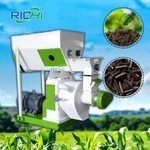

Aquaculture feed production has developed rapidly as shrimp and fish farming become increasingly commercialized.
At first glance, producing shrimp feed may appear similar to manufacturing livestock feed.
Both processes involve raw materials, grinding, mixing, conditioning, pellet formation, cooling, and packaging.
But there is a critical difference.
Aquatic feed must perform in water.
A livestock pellet can be consumed directly after being placed in a feeding trough. Shrimp feed enters an aquatic environment where water can affect pellet strength, nutrient release, and feeding behavior.
This makes physical quality extremely important.
Water Stability Is a Business Issue
When shrimp feed breaks apart too quickly, nutrients can disperse into the water.
This may reduce feed utilization and increase the amount of organic matter entering the culture environment.
The result can be higher feed costs and potentially more difficult water management.
Therefore, feed manufacturers need to consider not only nutritional composition but also pellet durability and water stability.
This is one reason why a specialized animal feed granulator should be evaluated differently when it is intended for aquatic feed.
Start With Fine Raw Material Preparation
Shrimp feed often requires relatively fine raw materials.
Large particles can interfere with the production of small pellets.
Fine grinding helps create a more homogeneous mixture and allows the pelletizing system to produce smaller diameters.
The grinding system therefore plays an important role in shrimp feed production.
Ultra-fine grinding may also increase energy consumption, so the target particle size should be determined according to the feed formula and final pellet specification.
Mixing Becomes Even More Important
Shrimp feed formulas can contain multiple ingredients.
Fish meal, soybean meal, wheat products, mineral sources, additives, and other materials may all be included.
The ingredients need to be distributed evenly.
This is particularly important when the feed contains small quantities of functional additives.
A high-quality mixer can improve formula consistency before the material reaches the pelletizing stage.
Pellet Diameter Depends on Shrimp Growth Stage
Shrimp do not consume the same size of feed throughout their life cycle.
Smaller shrimp generally require smaller feed particles.
Larger shrimp can consume larger pellets.
This means a commercial shrimp feed manufacturer may need to produce multiple pellet sizes.
A flexible production system should therefore allow die changes or other adjustments without creating excessive downtime.
Comparing Different Production Capacities
Small aquaculture farms may not need a large factory.
A smaller operation could consider a 3-4 T/H shrimp feed making machine for sale when its local market can absorb this production volume.
For a startup, however, even that capacity may be too high.
The better choice depends on:
- Farm size.
- Number of customers.
- Production schedule.
- Local feed demand.
- Raw material availability.
- Expected sales growth.
Capacity should follow market demand.
Conditioning Helps Build Better Pellets
Conditioning is especially important when producing dense and durable aquatic feed.
The process can improve moisture distribution and prepare the feed for compression.
The exact temperature, moisture, and retention time should be adjusted according to the formula.
Longer conditioning does not automatically mean better feed.
The objective is controlled preparation.
If the material becomes too wet, downstream drying requirements may increase.
If conditioning is insufficient, pellet quality may suffer.
Compression Ratio and Die Selection
Small shrimp pellets may require a different die configuration from large livestock pellets.
The compression ratio influences how much pressure is applied during pellet formation.
A suitable die can help produce dense pellets with a consistent shape.
However, die selection should be based on the complete formula.
Ingredients with high fiber, high protein, or different binding properties can react differently under compression.
Therefore, test production is often valuable before finalizing a commercial configuration.
Pelletizing vs. Extrusion
Shrimp feed can be manufactured through different technologies.
Pelletizing is widely used because it offers a mature and efficient method for producing dense feed.
Extrusion can provide additional processing flexibility and may be selected when the feed requires specific physical properties.
The best technology depends on the feed product, target market, formula, desired water stability, and production scale.
The decision should not be based simply on which technology is newer.
Drying After Pellet Formation
Moisture control continues after pelletizing.
Fresh feed may need drying to reach a suitable final moisture content.
Drying should be gradual and controlled.
Excessive drying can affect pellet quality and energy costs.
Insufficient drying can create storage problems.
In humid climates, drying and cooling can become particularly important.
A complete production system should therefore integrate the drying stage with the rest of the process.
Cooling Protects the Finished Product
After drying, the pellets need to be cooled.
Packaging hot material can create condensation inside bags.
This may reduce storage stability.
Cooling also helps stabilize the physical structure of the pellet.
Once the product reaches an appropriate temperature, it can be screened and packaged.
Screening Is Not Just Cosmetic
Screening removes fines and irregular particles.
This improves product consistency.
For commercial shrimp feed, uniform particle size can be important because feeding systems and shrimp growth stages may require predictable feed characteristics.
Fines can often be returned to the production process, reducing waste.
Coating Adds Another Layer of Functionality
Some aquatic feeds require post-pellet coating.
Oil, attractants, vitamins, pigments, probiotics, or other additives may be applied after the pellet has been formed and cooled.
This can help protect certain ingredients from excessive heat during the earlier production stages.
A coating system also allows manufacturers to adjust the final product according to market requirements.
Why Plant Design Matters
A shrimp feed factory should be designed as a complete system.
A typical process may include:
Raw material receiving → cleaning → crushing → batching → mixing → fine grinding → conditioning → pelletizing → drying → cooling → screening → packaging.
The exact process depends on the product.
Some plants may incorporate extrusion, post-conditioning, coating, or other specialized systems.
The equipment layout should minimize unnecessary material movement.
(Related Post: https://www.richipelletmill.com/chicken-feed-pellet-machine-for-sale/)
Automation Can Improve Batch Consistency
Shrimp feed production may involve multiple formulas and pellet sizes.
Automation can simplify the transition between products.
Automatic batching reduces manual weighing errors.
Automatic temperature monitoring helps stabilize conditioning and drying.
Automated packaging improves weight consistency.
These systems can become particularly valuable as production volume increases.
Selecting the Right Technology Partner
A supplier should understand more than pellet mills.
They should be able to evaluate raw materials, process flow, equipment configuration, workshop layout, and production objectives.
A supplier such as Richi manufacture can be considered when comparing complete feed processing solutions, but buyers should always provide detailed information about their project before requesting a final configuration.
Continue Exploring Aquaculture Feed Technology
The shrimp feed industry is moving toward more specialized products.
Feed manufacturers are increasingly focusing on water stability, precise nutrition, improved digestibility, and lower feed waste.
For companies entering this market, understanding the relationship between raw materials, grinding, mixing, conditioning, pelletizing, drying, and coating is essential.
Additional find out here now resources can help producers compare different production concepts before making equipment decisions.
Ultimately, the strongest shrimp feed business is not necessarily the one with the largest production line.
It is the one that can consistently manufacture the right feed for the right shrimp at the right cost.