

How to Produce Cat Litter with Better Absorption
Cat litter absorption is one of the most important performance indicators for both manufacturers and pet owners. A cat litter product may have attractive packaging and competitive pricing, but if it absorbs urine slowly, produces excessive liquid leakage, or fails to control moisture effectively, customers are unlikely to repurchase it.
Producing cat litter with better absorption is therefore not simply a matter of choosing a highly absorbent raw material. Absorption performance depends on the interaction between raw material properties, formulation, particle size, moisture, pellet density, pellet structure, drying conditions, screening, and storage. A well-designed production process is necessary to convert suitable raw materials into a stable finished product.
For commercial manufacturers, a properly engineered cat litter pellet production line can integrate raw material preparation, grinding, mixing, conditioning, pelletizing, drying, cooling, screening, and packaging. By controlling each stage, manufacturers can produce cat litter with faster liquid penetration, higher absorption capacity, good clumping performance, and relatively low dust.
This article explains the key factors affecting cat litter absorption and how manufacturers can improve product performance through formulation, processing technology, equipment selection, and quality control.
1. Why Absorption Matters in Cat Litter
Absorption determines how effectively cat litter handles urine and moisture.
High-quality cat litter should ideally:
- Absorb liquid quickly
- Hold absorbed moisture effectively
- Minimize leakage
- Reduce unpleasant odors
- Form stable clumps when applicable
- Remain easy to scoop
- Maintain acceptable pellet strength
- Produce limited dust
If litter absorbs slowly, urine may move through the litter and reach the bottom of the box.
If the material absorbs liquid rapidly but breaks down excessively, it may create a large amount of fine material.
Therefore, manufacturers need to balance absorption, durability, clumping, density, and dust control rather than optimizing only one characteristic.
2. What Determines Cat Litter Absorption?
Several factors influence absorption.
The most important include:
- Raw material type
- Fiber structure
- Particle size
- Formulation
- Moisture content
- Pellet density
- Pellet porosity
- Pelletizing pressure
- Drying conditions
- Screening efficiency
- Storage conditions
These factors interact with one another.
For example, changing pellet density may improve durability but reduce the speed at which liquid enters the pellet. Similarly, increasing fiber content may improve absorption but affect pellet strength.
The manufacturing process must therefore be optimized as a complete system.
3. Select Naturally Absorbent Raw Materials
The first step toward better absorption is selecting suitable raw materials.
Different cat litter types use different materials.
Tofu Cat Litter
Tofu litter commonly uses soybean residue or soybean fiber.
Wood Cat Litter
Wood fiber, sawdust, and wood processing residues can be processed into absorbent litter.
Corn Cat Litter
Corn fiber and corn-based materials can provide plant-based absorption.
Grass-Based Cat Litter
Certain grass fibers can be processed into lightweight absorbent pellets.
Bentonite Cat Litter
Bentonite has naturally strong moisture absorption and clumping properties.
The optimal processing technology depends on the material.
4. Use High-Quality Raw Materials
Not all raw materials with the same name have identical absorption characteristics.
For example, soybean residue can vary in:
- Fiber content
- Moisture
- Particle size
- Bulk density
- Residual oil
- Purity
Similarly, sawdust can vary according to:
- Tree species
- Particle size
- Moisture
- Processing method
Before designing a commercial production system, manufacturers should test the actual raw materials that will be used.
5. Control Raw Material Moisture
Moisture is critical to cat litter production.
If raw materials contain too much moisture, they may require more drying and may behave poorly during pelletizing.
If they are excessively dry, pellet formation can become unstable.
Moisture also affects the internal structure of the finished pellet.
Manufacturers should establish an appropriate moisture range for each stage instead of using one moisture target for all materials.
6. Why Particle Size Matters
Particle size influences both pellet formation and liquid penetration.
Very coarse particles may result in:
- Weak pellet structure
- Uneven density
- Poor surface quality
Extremely fine particles may result in:
- Excessive dust
- High energy consumption
- Excessively dense pellets
- Reduced permeability
A controlled particle-size distribution is generally more desirable.
Grinding should therefore be optimized according to the raw material and final product requirements.
7. Grinding the Raw Material Properly
A crusher or hammer mill may be used to reduce raw material size.
The objective is not simply to make the material as fine as possible.
Instead, manufacturers should achieve a particle size that provides:
- Good mixing
- Stable pelletizing
- Appropriate pellet strength
- Suitable porosity
- Low dust generation
The correct grinding specification should be established through production testing.
8. Formulation Has a Major Influence on Absorption
A cat litter formula can contain several different materials.
For example, a plant-based formulation may include:
- Soybean residue
- Corn fiber
- Starch
- Wood fiber
- Pea fiber
- Bamboo fiber
- Odor-control additives
Each ingredient affects the final product differently.
Fiber can contribute to liquid absorption.
Starch can improve binding and clumping.
Other additives may help with odor control.
The final formula should therefore balance absorption with pellet strength and manufacturing stability.
9. Fiber Structure and Absorption
Plant fibers often contain microscopic spaces that can hold moisture.
The structure of the fiber affects:
- Liquid penetration
- Moisture retention
- Pellet porosity
- Pellet density
However, excessive mechanical processing can alter fiber structure.
For this reason, manufacturers should avoid unnecessary grinding or compression.
The objective is to preserve useful absorbent characteristics while creating pellets strong enough for transportation and use.
10. Add Appropriate Binding Materials
Some cat litter formulations require binders to improve pellet formation.
Starch is one example of a material that can contribute to binding.
A suitable binder can improve:
- Pellet strength
- Clumping
- Shape stability
- Resistance to breakage
However, excessive binder can make pellets too dense.
Very dense pellets may slow liquid penetration.
Therefore, binder dosage should be carefully optimized.
11. Mixing Must Be Uniform
After batching, raw materials should be thoroughly mixed.
A uniform mixture ensures that each pellet receives a relatively consistent proportion of the ingredients.
Poor mixing can produce pellets with different:
- Absorption
- Density
- Strength
- Clumping performance
An industrial mixer should provide sufficient mixing uniformity without unnecessarily damaging the raw material structure.
12. Moisture Conditioning Before Pelletizing
Moisture conditioning is an important step before pellet formation.
Water can be added gradually through a controlled spraying system.
The goal is to distribute moisture evenly throughout the mixture.
Uneven moisture may cause:
- Irregular pellet formation
- Poor pellet strength
- Uneven density
- Inconsistent drying
Automatic moisture control can improve process stability in commercial production.
13. Pellet Density and Absorption
Pellet density is one of the most important factors affecting absorption.
A very loose pellet may absorb liquid rapidly but break apart easily.
A very dense pellet may be strong but allow liquid to penetrate more slowly.
The ideal density depends on the product type.
Manufacturers should therefore test different pelletizing conditions to find the appropriate balance.
14. Optimize Pelletizing Pressure
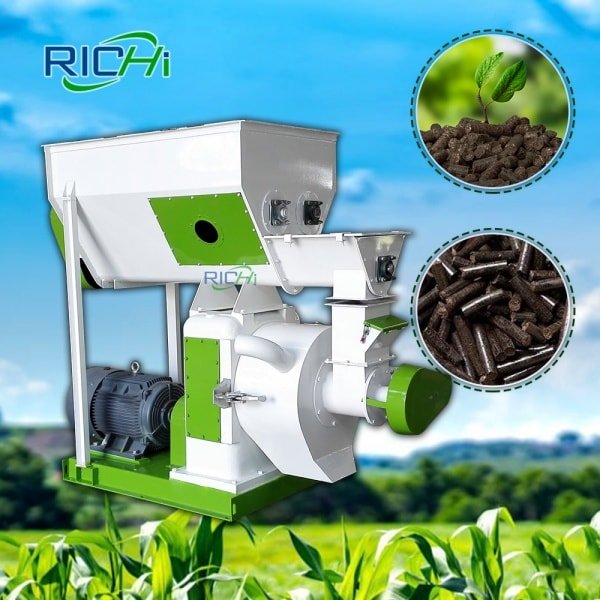
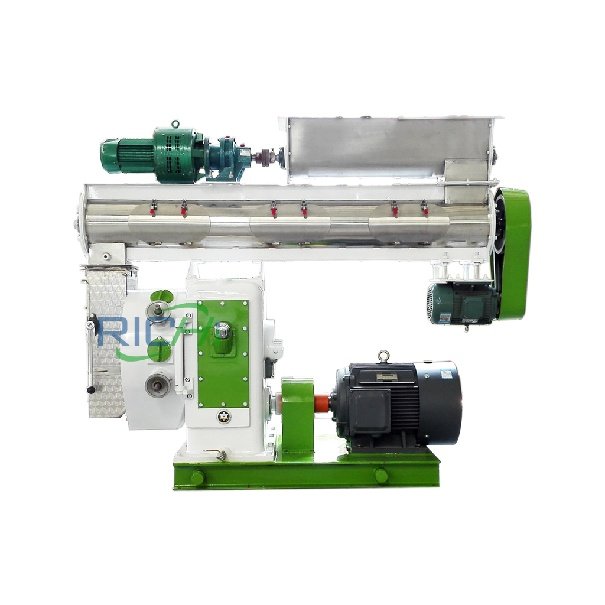
A pellet mill compresses prepared material through a die.
Pelletizing pressure influences:
- Pellet density
- Strength
- Surface structure
- Durability
- Porosity
Excessive compression may produce pellets that are too dense.
Insufficient compression may result in weak pellets.
The pellet mill should therefore operate under stable conditions.
https://pelletisingmachine.com/cat-litter-pellet-machine
15. Choose the Correct Die
The die is a critical component of pelletizing equipment.
Die selection influences:
- Pellet diameter
- Pellet density
- Production capacity
- Compression
- Pellet appearance
Different cat litter products may require different pellet dimensions.
A manufacturer producing fine tofu cat litter may need different forming conditions from a factory producing larger wood pellets.
16. Pellet Shape Affects Liquid Contact
Pellet shape influences the surface area available for liquid contact.
Small pellets generally provide a larger total surface area for a given mass.
However, extremely small pellets can increase:
- Dust
- Tracking
- Production difficulty
- Packaging losses
Therefore, pellet size should be selected based on both performance and consumer requirements.
17. Create Appropriate Pellet Porosity
Porosity refers to the spaces within the pellet structure.
Appropriate porosity can allow liquid to penetrate the pellet.
However, excessive porosity may weaken the pellet.
The goal is to create a structure that provides:
Fast Liquid Entry + High Moisture Retention + Adequate Pellet Strength
This is one of the main reasons why pelletizing conditions need to be carefully controlled.
18. Drying Is Critical to Final Absorption
After pelletizing, the pellets generally need to be dried to an appropriate moisture level.
Drying affects:
- Pellet hardness
- Porosity
- Moisture content
- Storage stability
- Absorption behavior
Over-drying can make some plant-based pellets excessively brittle.
Under-drying can result in:
- Poor storage stability
- Excessive moisture
- Soft pellets
- Packaging problems
The dryer should therefore be controlled carefully.
19. Avoid Excessive Drying
The purpose of drying is not to remove as much water as possible.
Instead, the manufacturer should reach a stable final moisture level appropriate for the product.
Excessive drying can increase energy consumption and may negatively affect pellet structure.
An efficient drying system should provide consistent temperature, airflow, and residence time.
20. Cooling After Drying
Hot pellets should be cooled before screening and packaging.
Cooling helps stabilize the product and prevent condensation inside packaging.
A suitable cooler can reduce product temperature while maintaining pellet structure.
Cooling also provides an opportunity to remove some loose particles through controlled airflow.
21. Screening Improves Finished Product Quality
After cooling, the pellets should be screened.
The screening system separates:
- Qualified pellets
- Fine powder
- Broken pellets
- Oversized material
Removing excessive fines helps maintain a more consistent product.
Fines may also cause:
- Higher dust
- Uneven absorption
- Poor appearance
- Increased packaging losses
Suitable fines can sometimes be recycled into the production process.
22. Improve Absorption by Reducing Excessive Pellet Breakage
Pellets can break after they leave the pellet mill.
Potential causes include:
- Excessive conveying distance
- High drop height
- Excessive conveyor speed
- Poor cooling
- Weak pellet structure
- Aggressive screening
Manufacturers should design the material-handling system to minimize unnecessary mechanical impact.
23. Use Gentle Conveying
Conveyors should move pellets efficiently without causing excessive breakage.
Possible systems include:
- Belt conveyors
- Screw conveyors
- Bucket elevators
The selection depends on product characteristics and factory layout.
Transfer points should be carefully designed.
Reducing unnecessary height differences can reduce pellet impact and preserve product integrity.
24. Improve Absorption Through Clumping Performance
For clumping cat litter, absorption and clumping are closely connected.
A good product should:
- Absorb liquid quickly.
- Form a stable clump.
- Prevent excessive liquid from reaching the bottom.
- Allow the user to remove the clump easily.
- Leave surrounding litter relatively dry.
Starch and other binders can contribute to clumping, but their dosage should be optimized.
25. Add Odor-Control Ingredients Carefully
Odor control is often combined with absorption.
Potential additives include:
- Activated carbon
- Natural mineral adsorbents
- Plant-based odor-control materials
However, additives should not excessively reduce pellet porosity or absorption speed.
The final formula should be tested for both liquid absorption and odor performance.
26. How to Measure Cat Litter Absorption
Manufacturers should establish standardized internal tests.
Important measurements include:
Absorption Capacity
How much liquid can the product hold relative to its weight?
Absorption Speed
How quickly does the product absorb liquid?
Clumping Time
How quickly does a stable clump form?
Clump Strength
Can the clump be removed without breaking apart?
Liquid Penetration
How far does liquid travel through the litter?
These tests help manufacturers compare formulas and process parameters.
27. Laboratory Testing and Real-World Testing
Laboratory tests provide useful numerical data, but real-world testing is also important.
Manufacturers can evaluate products under simulated litter-box conditions.
They can observe:
- Liquid spreading
- Clump formation
- Odor
- Tracking
- Dust
- Ease of scooping
Combining laboratory and practical testing provides a more complete evaluation.
28. Optimize the Complete Production Process
Absorption should not be optimized at only one stage.
A commercial process may follow:
Raw Material Preparation
↓
Grinding
↓
Batching
↓
Mixing
↓
Moisture Conditioning
↓
Pelletizing
↓
Drying
↓
Cooling
↓
Screening
↓
Packaging
Each stage can influence final absorption.
This is why a properly integrated cat litter pellet production line is important for commercial manufacturers.
29. Equipment in a Cat Litter Pellet Production Line
A commercial production line may include:
Raw Material Equipment
- Hopper
- Conveyor
- Cleaner
- Magnetic separator
Size Reduction Equipment
- Crusher
- Hammer mill
Formulation Equipment
- Batching system
- Mixer
- Additive dosing system
Pelletizing Equipment
- Conditioner
- Pellet mill
- Feeder
Drying and Cooling
- Dryer
- Cooler
Finishing
- Screening machine
- Coating or spraying system
Packaging
- Automatic weighing machine
- Bagging machine
- Sealing machine
Environmental Equipment
- Cyclone
- Bag filter
- Exhaust fan
The exact configuration should be based on the raw materials and product specifications.
30. Why a Cat Litter Pellet Production Line Should Be Customized
Different cat litter materials have very different processing characteristics.
A tofu cat litter plant may require intensive drying of soybean residue.
A wood litter plant may require powerful grinding and dust collection.
A bentonite plant may need mineral crushing and granulation.
Therefore, the same equipment configuration cannot necessarily be applied to every project.
A customized cat litter pellet production line can be designed according to:
- Raw material
- Moisture
- Production capacity
- Pellet size
- Product density
- Absorption target
- Automation level
- Factory layout
- Packaging requirements
31. Small-Scale Production
A small cat litter producer may use a relatively simple process:
Grinding → Mixing → Pelletizing → Drying → Cooling → Screening → Packaging
This can reduce initial investment.
However, manufacturers should still include appropriate dust collection and moisture control.
Small-scale production can be useful for:
- Market testing
- Local pet shops
- Small regional brands
- New product development
32. Large-Scale Commercial Production
A large factory can integrate automation throughout the process.
A typical system may include:
Automatic Receiving → Cleaning → Crushing → Grinding → Drying → Batching → Mixing → Conditioning → Pelletizing → Drying → Cooling → Screening → Packaging
PLC control can monitor:
- Temperature
- Moisture
- Material flow
- Motor load
- Production rate
- Equipment alarms
Automation helps maintain consistent production quality.
33. How to Reduce Dust While Improving Absorption
Absorption and dust control should be considered together.
Manufacturers can:
- Optimize raw material grinding
- Avoid excessive fine powder
- Improve pellet durability
- Control moisture
- Optimize pellet density
- Screen out fines
- Reduce mechanical impact
- Use dust collection
A highly absorbent product is not necessarily a good commercial product if it creates excessive dust.
34. Storage Conditions Affect Absorption
Even a well-manufactured product can lose quality during storage.
Plant-based cat litter should be protected from excessive humidity.
High humidity can cause:
- Moisture absorption during storage
- Pellet softening
- Premature clumping
- Reduced shelf stability
Packaging should therefore provide appropriate moisture protection.
The warehouse should also be:
- Dry
- Clean
- Well ventilated
- Protected from water leakage
35. Packaging Design Matters
Packaging protects the cat litter from environmental moisture.
Manufacturers should select packaging materials based on:
- Product moisture
- Storage duration
- Transportation conditions
- Retail environment
Proper sealing is important.
If packaging allows moisture to enter, absorption performance can change before the product reaches consumers.
36. Common Problems With Poor Absorption
Slow Absorption
Possible causes:
- Excessive pellet density
- Poor raw material selection
- Excessive binder
- Improper pellet size
Low Absorption Capacity
Possible causes:
- Low fiber content
- Unsuitable formulation
- Excessive compression
- Poor material structure
Weak Clumps
Possible causes:
- Insufficient binder
- Poor formulation
- Incorrect moisture
- Inadequate pelletizing
Excessive Dust
Possible causes:
- Excessive grinding
- Weak pellets
- Poor screening
- Excessive mechanical impact
Each problem requires analysis of both formulation and process conditions.
37. How to Improve Production Efficiency
Improving absorption should not significantly increase manufacturing costs.
Manufacturers can improve efficiency through:
- Local raw materials
- Stable formulas
- Efficient grinding
- Accurate batching
- Uniform mixing
- Controlled drying
- Stable pelletizing
- Efficient screening
- Automatic packaging
Energy consumption should be monitored at every major processing stage.
38. The Importance of Raw Material Testing
Before investing in a commercial production line, manufacturers should test the intended raw materials.
Important tests include:
- Moisture
- Particle size
- Bulk density
- Fiber content
- Absorption
- Pelletizing behavior
This information helps engineers select appropriate equipment.
It also reduces the risk of designing a production line that is unsuitable for the actual material.
39. Pilot Testing Before Mass Production
Pilot production can help determine the optimal formula and process.
Manufacturers can test:
- Different raw material ratios
- Different pellet sizes
- Different moisture levels
- Different binder ratios
- Different pelletizing pressures
The best formula can then be transferred to the commercial production line.
This approach can reduce the risk of large-scale production problems.
40. RICHI Cat Litter Pellet Production Line
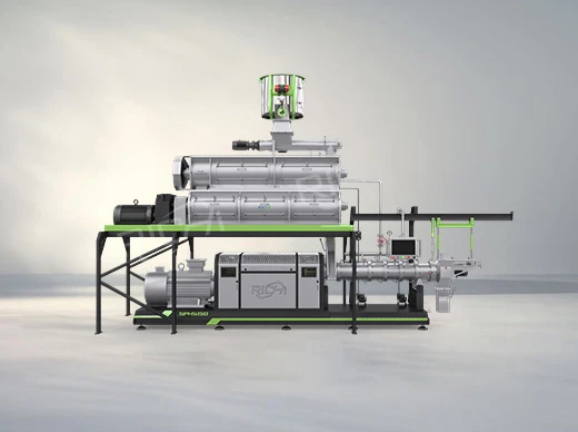
RICHI Machinery can provide customized equipment and process solutions for manufacturers who want to produce absorbent cat litter from different raw materials.
A complete cat litter pellet production line can be designed according to:
- Raw material characteristics
- Desired absorption
- Pellet diameter
- Production capacity
- Factory space
- Energy availability
- Automation requirements
- Packaging format
The process may include raw material preparation, crushing, grinding, drying, batching, mixing, pelletizing, cooling, screening, dust collection, and packaging.
RICHI can also provide engineering services covering production-line design, equipment manufacturing, transportation, installation and commissioning, operator training, and technical support.
The objective is to create a production system that is not only capable of producing pellets, but also provides stable control over moisture, density, pellet quality, dust, and final absorption performance.
41. How to Build a High-Absorption Cat Litter Factory
A practical factory-development process can include:
Step 1: Identify the Target Product
Define the desired absorption, clumping, pellet size, and dust level.
Step 2: Analyze Raw Materials
Test moisture, particle size, fiber structure, and absorption.
Step 3: Develop the Formula
Select suitable raw material ratios and additives.
Step 4: Conduct Pilot Tests
Compare different formulations and pelletizing conditions.
Step 5: Determine Production Capacity
Estimate current demand and future expansion.
Step 6: Design the Production Line
Select equipment according to test results.
Step 7: Plan the Factory
Arrange equipment according to logical material flow.
Step 8: Install and Commission
Test each machine and the complete process.
Step 9: Establish Quality Control
Create standards for moisture, absorption, dust, clumping, and pellet durability.
Step 10: Optimize Commercial Production
Use production data to continuously improve efficiency and product performance.
42. Future Trends in Absorbent Cat Litter
The cat litter market continues to develop toward more specialized products.
Manufacturers may increasingly focus on:
- Higher absorption
- Faster clumping
- Lower dust
- Lightweight products
- Plant-based raw materials
- Improved odor control
- Biodegradable materials
- Customized pellet sizes
Production flexibility will therefore become increasingly important.
A flexible pelletizing and processing system can allow manufacturers to develop several product grades using the same basic factory infrastructure.
Conclusion
Producing cat litter with better absorption requires much more than selecting an absorbent raw material. The final performance is determined by the interaction between raw material properties, formulation, particle size, moisture, pellet density, porosity, pelletizing pressure, drying, cooling, screening, and storage.
The key principles include:
- Select naturally absorbent raw materials.
- Maintain consistent raw material quality.
- Control particle size through appropriate grinding.
- Develop a balanced formulation.
- Mix ingredients uniformly.
- Maintain appropriate moisture before pelletizing.
- Avoid excessive pellet compression.
- Optimize pellet density and porosity.
- Control drying carefully.
- Cool pellets before screening.
- Remove excessive fines.
- Minimize pellet breakage during conveying.
- Protect finished products from humidity.
For commercial manufacturers, a properly engineered cat litter pellet production line provides the foundation for stable and efficient production. By integrating grinding, batching, mixing, pelletizing, drying, cooling, screening, dust collection, and packaging into one coordinated system, manufacturers can maintain better control over the factors that determine absorption.
RICHI can design customized cat litter production solutions based on different raw materials, product requirements, capacities, factory layouts, and automation levels. With appropriate equipment selection and process optimization, manufacturers can produce cat litter that combines fast liquid absorption, high moisture-holding capacity, stable clumping, good pellet durability, low dust, and consistent quality.
Ultimately, the best absorbent cat litter is the result of careful formulation plus precise manufacturing control. When every stage of the production process is optimized—from raw material preparation to final packaging—the factory can achieve better product performance while maintaining efficient, reliable, and scalable commercial production.