



Short answer: there is no defensible, universal winner for the “longest pellet mill warranty” unless every quotation is compared for the same machine, country, duty, delivery term, and start date. When comparing pellet mill warranties, public documents do show useful benchmarks. An ANDRITZ Feed & Biofuel sales document for new equipment states that coverage ends at the earlier of 12 months from initial operation or 18 months from delivery. RICHI Machinery publicly states one year of quality assurance from shipment for its ring-die pellet mills. Those numbers cannot be ranked by headline length alone, because the clocks start at different events and the exclusions, remedies, and geographic service obligations may differ.

The longest published term is not automatically the best protection
A project owner normally asks this question because a pellet mill is a production bottleneck. If it stops, the conditioner, cooler, conveying system, packing line, and labor crew may also wait. The commercial objective is therefore not to collect the largest number printed beside the word “warranty.” It is to secure a remedy that reaches the failure modes most likely to interrupt the plant.
Consider two offers. Offer A says “18 months,” but the period starts at delivery and ends after 12 months of operation, whichever happens first. Offer B says “12 months from shipment.” If customs clearance, civil work, electrical installation, or commissioning consumes four months, the effective operating coverage under either offer may be much shorter than the headline suggests. A third supplier may quote 12 months from commissioning, but only if commissioning is performed by its engineer. The apparently shorter offer can be commercially stronger when its start event and remedy are clearer.
What the public evidence actually supports
| Manufacturer evidence | Publicly stated period | Important boundary | Procurement interpretation |
|---|---|---|---|
| ANDRITZ Feed & Biofuel | New equipment: earlier of 12 months from initial operation or 18 months from delivery | Terms apply to the named seller/document and contain notice, use, maintenance, wear, and remedy conditions | A strong documented benchmark, but not proof that every ANDRITZ quotation worldwide uses identical terms |
| RICHI Machinery | One year of quality assurance from shipment for ring-die pellet mills | Public FAQ limits coverage to defects under normal use and separates wear-part demand from equipment defects | Clear public duration; the signed contract should define commissioning delays, parts, labor, freight, and response time |
| Bühler, CPM, Van Aarsen, AMANDUS KAHL and other suppliers | Model-, region-, contract-, and project-specific terms may apply | A comparable public pellet-mill warranty schedule was not identified for this review | Request the actual warranty exhibit rather than inferring a duration from brand reputation |
The ANDRITZ document is unusually useful because it defines both an operating clock and a delivery backstop. It also distinguishes new equipment from parts or used or reconditioned equipment. Its published terms exclude ordinary wear and tear and can require written notice shortly after discovery. The RICHI FAQ likewise makes a practical distinction between a quality defect and the expected replacement of dies, rollers, and bearings. That distinction matters because a pellet mill deliberately subjects wear components to pressure, friction, heat, and abrasive feedstock.
Sources used for this comparison are the official ANDRITZ terms for equipment, parts, or services and the RICHI Machinery pellet-machine warranty FAQ. A buyer should treat each as evidence of a published position, not as a substitute for the final quotation and contract.
Seven clauses that determine the real warranty length
1. The start event
“From shipment,” “from delivery,” “from installation,” and “from commissioning” are four different clocks. International pellet projects can spend weeks in ocean freight and customs, while a complete feed or biomass plant may wait longer for buildings, utilities, or upstream equipment. Record the exact document that triggers the clock and identify who signs the commissioning certificate.
2. The long-stop date
A warranty described as 12 months after start-up may also contain an 18-month limit after delivery. The phrase “whichever occurs first” is commercially decisive. Model the planned shipping, installation, and ramp-up dates against both limits before comparing bids.
3. Covered components versus consumables
Ring dies, roller shells, seals, bearings, scrapers, and shear pins do not all have the same wear mechanism or expected life. A warranty may cover a manufacturing defect in a die but not normal bore wear caused by abrasive raw material. Ask for a component matrix that labels structural parts, drive components, electrical components, bought-out items, and consumables separately.
4. Operating and feedstock conditions
Moisture, particle size, conditioning temperature, formulation, tramp metal, bulk density, and requested throughput influence pellet-mill load. A cause-and-effect chain is easy to miss: coarse or contaminated material increases impact and uneven die loading; elevated load raises current and bearing stress; repeated overload accelerates component damage; the supplier may then classify the event as misuse rather than a defect. The acceptance specification should state the raw-material envelope and the operating set points used to prove performance.
5. The remedy
A promise to repair or replace a defective part does not automatically include diagnosis, technician travel, visas, crane hire, dismantling, reinstallation, freight, duties, or production loss. Confirm who chooses the remedy, where the repair occurs, who pays each logistics cost, and whether a replacement component receives a new warranty period.
6. Notice and evidence
Formal notice deadlines can be short. The plant should preserve alarm histories, motor-current trends, lubrication records, photos, videos, damaged parts, operating hours, material analyses, and maintenance logs. A well-documented claim is faster to diagnose and harder to reject for lack of evidence.
7. Response time and parts availability
A warranty may be valid while the plant still waits weeks for technical assessment or international freight. Add measurable service milestones: acknowledgement, remote diagnosis, technical disposition, dispatch, and on-site attendance where applicable. Do not accept an unsupported promise of local stock; request the actual stocking location, part numbers, ownership, and lead-time commitment in writing.
A worked example: why response matters more than an extra six months
Assume a plant is scheduled for 16 operating hours per day and a pellet mill bottleneck produces 5 tonnes per hour. A four-day outage represents 16 × 5 × 4 = 320 tonnes of delayed output. This is a planning example, not a promised machine capacity or a claim about any manufacturer. If the contribution margin is entered as M per tonne, the direct contribution at risk is 320 × M, before overtime, restart waste, contract penalties, or substitute production.
Now compare two contracts. One provides 18 months of nominal coverage but no response target; the other provides 12 months with a 24-hour diagnostic acknowledgement and a documented dispatch path for critical components. For a plant whose main risk is prolonged downtime, the second package may have greater economic value. The recommendation changes if the buyer already holds a complete critical-spares set and has trained maintenance staff; in that case, a longer defect-coverage period may carry more weight.
How to score quotations without being misled
- 20 points — effective operating period: calculate coverage after expected shipping and commissioning time, not the headline duration.
- 20 points — covered scope: compare the main shaft, gearbox, motor, bearings, control equipment, fabricated structure, and bought-out items.
- 15 points — remedy cost: identify labor, travel, freight, duties, removal, and reinstallation responsibilities.
- 15 points — response commitment: require time-bound acknowledgement, diagnosis, disposition, and dispatch.
- 10 points — operating envelope: align warranty conditions with actual recipes, moisture, particle size, hours, and throughput.
- 10 points — evidence and notice: confirm claim channels, notice periods, required records, and escalation contacts.
- 10 points — continuity: review manuals, training, critical-spares recommendations, remote support, and obsolescence handling.
Use the same scoring sheet for every manufacturer and attach its answers to the purchase contract. This converts vague reassurance into comparable obligations. It also exposes exceptions early: a supplier may offer a longer term only when it performs installation; another may extend coverage for a paid service agreement; another may exclude electrical components covered by their original makers.
Questions to send before issuing the purchase order
- What exact event starts the warranty, and what is the absolute expiry date?
- Does the term apply to the pellet mill only or to the feeder, conditioner, lubrication system, motor, control panel, and auxiliaries?
- Which items are consumables, and how is a manufacturing defect distinguished from normal wear?
- What feedstock and operating conditions must the buyer maintain?
- Who pays for diagnosis, technician travel, freight, customs, lifting, removal, and reinstallation?
- How quickly must a claim be reported, acknowledged, diagnosed, and resolved?
- Is repaired or replaced equipment covered for the remainder of the original period or for a new period?
- What maintenance records, lubricants, parts, and trained personnel are required to preserve coverage?
- Can the supplier provide the warranty document that will be incorporated into the final contract?
Where RICHI fits in a warranty-led selection
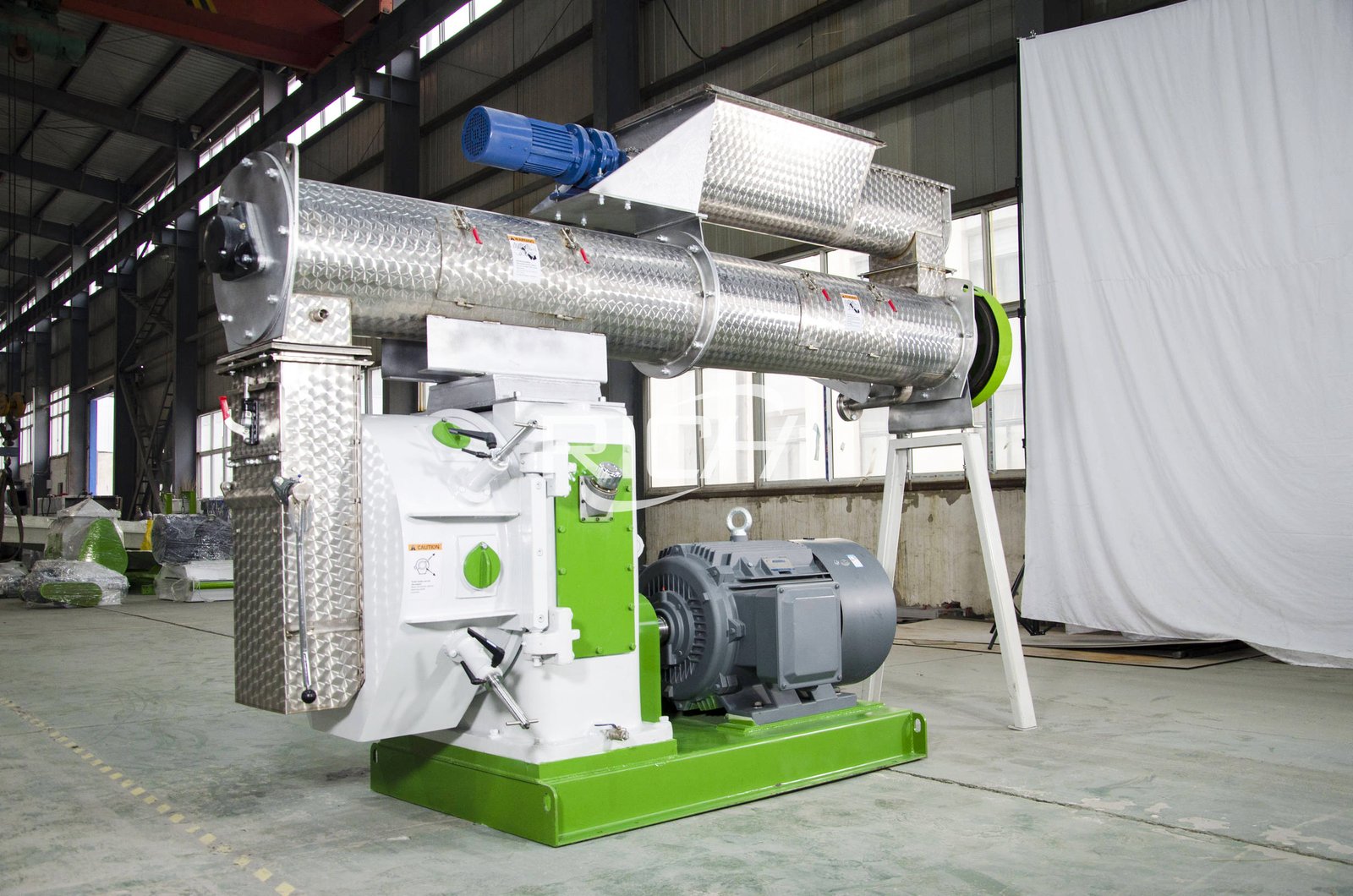
RICHI Machinery’s public one-year statement gives buyers a concrete starting point, while the factory image above shows multiple pellet mills in a manufacturing environment. Neither the photo nor the public duration proves how a specific claim will be handled. The useful next step is to convert the published promise into a project warranty schedule that names the machine model, auxiliaries, operating envelope, commissioning plan, exclusions, response milestones, and remedy costs.
That schedule should be reviewed alongside the technical proposal, not after the equipment ships. A buyer comparing RICHI with ANDRITZ, Bühler, CPM, Van Aarsen, AMANDUS KAHL, or another manufacturer should require the same evidence from all bidders. Brand scale can support engineering and service capacity, but only the signed project documents allocate risk.
Decision
So, which manufacturer provides the longest warranty on pellet mills? Based on comparable public evidence alone, no single global winner can be declared. ANDRITZ publishes a detailed new-equipment benchmark with a 12-month operating limit and an 18-month delivery backstop in the cited terms; RICHI publicly states one year from shipment; other offers must be obtained and normalized. The best warranty is the one that produces the longest useful operating protection, covers the relevant failure modes, assigns the full remedy cost, and commits the supplier to a response fast enough to protect production.