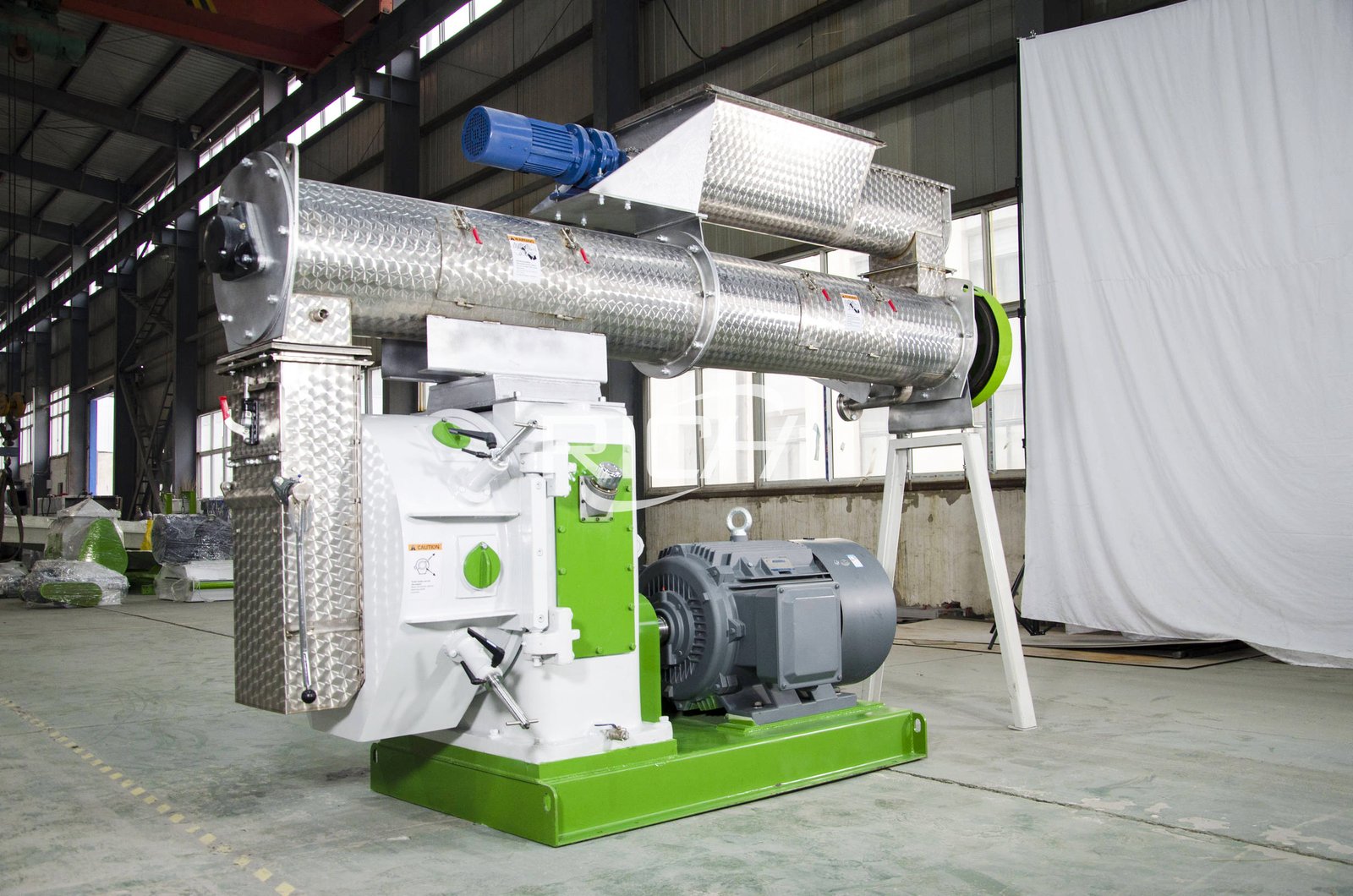




Capacity is an important starting point for a pellet production line, but it is not enough information to produce a reliable quotation. Two factories both described as 5 t/h can require very different equipment, building space, utilities, storage, automation, and investment. Raw-material moisture, particle size, finished pellet specification, operating schedule, site conditions, and project scope can change the process far more than the capacity number itself. A quotation based only on tons per hour is therefore best treated as a rough budget, not a final technical offer.

Capacity Does Not Define The Raw Material
A 5 t/h line processing dry sawdust is different from a 5 t/h line receiving wet wood chips. One may require fine grinding and pelleting, while the other may need chipping, drying, fuel handling, dust collection, and larger intermediate storage. Feed pellets, fertilizer pellets, and biomass pellets also require different process stages even when the requested output is identical.
The supplier should therefore know the material type, moisture, particle size, bulk density, contamination, and expected variation before deciding which machines are necessary.
The Same Capacity Can Require Different Pellet Mills
Pellet mill output is affected by raw material, pellet diameter, formulation, die specification, conditioning, moisture, and operating load. A machine that reaches a certain throughput on one material may produce less on another. If the buyer requests only “10 t/h,” the supplier may select a model using assumptions that do not match the final product.
A professional quotation should state the conditions behind the capacity claim. This makes it possible to understand what may change if the raw material or pellet specification changes.
Hourly Capacity Does Not Define Annual Production
A plant rated at 5 t/h can produce very different annual tonnage depending on operating hours. One shift per day may require a different maintenance strategy, labor plan, storage capacity, and equipment redundancy from continuous three-shift operation. The supplier should ask for hours per shift, shifts per day, operating days per year, and expected utilization.
- Target tons per hour
- Annual production target
- Hours per shift
- Shifts per day
- Operating days per year
- Seasonal production peaks
These figures determine whether the requested hourly capacity is economically and operationally appropriate.
Raw-Material Moisture Can Change The Entire Budget
Drying is often one of the largest capital and energy sections in a biomass pellet project. If raw material arrives above the moisture range suitable for pelleting, the line may need a dryer, burner or furnace, hot-air system, cyclones, ducting, dust collection, and fuel preparation. A quotation that assumes dry material can be dramatically lower than one designed for wet feedstock.
This is why moisture should be measured before final quotation. If it varies seasonally, the supplier should design for a defined maximum rather than one convenient sample.
Particle Size Determines Preparation Equipment
Sawdust, chips, shavings, straw bales, grain, meal, and coarse fiber require different receiving and size-reduction equipment. A capacity-only request does not tell the supplier whether chippers, crushers, hammer mills, screens, magnets, or special conveyors are needed. The preparation section can represent a significant part of the quotation.
Provide photos, approximate dimensions, and representative samples for unusual raw materials. This helps the supplier define a realistic process rather than assume that the material is already ready for pelleting.
Pellet Size And Quality Change Equipment Selection
The desired pellet diameter, length, density, durability, moisture, and fines level affect die selection, conditioning, cooling, screening, and sometimes capacity. A line producing one standard pellet size may be simpler than a factory that changes frequently between several products.
If the plant must meet a specific customer or market standard, that requirement should be included before quotation so the supplier can identify the process controls needed to achieve it.
Building Constraints Can Change The Layout And Cost
A plant installed in an existing low building may require more horizontal conveying, smaller bins, additional elevators, or a different structural arrangement than a new purpose-built facility. A vertical layout can save footprint but requires more height and steelwork. A capacity number says nothing about these site constraints.
Before a serious quotation, provide building length, width, clear height, columns, floor levels, access doors, and any fixed equipment. If the building has not been built, provide land dimensions and local height limitations.
Electrical Conditions Affect Motors And Controls
Voltage, frequency, available transformer capacity, and motor-starting limitations can influence equipment and control-panel design. Large pellet lines may have substantial installed power. A quotation based only on capacity may assume a standard electrical configuration that does not match the site.
The supplier should confirm whether variable-frequency drives, soft starters, power-factor considerations, or transformer upgrades are required. These items can affect both investment and installation schedule.
Utilities Can Be Major Scope Items
Steam, compressed air, water, fuel, hot air, and other utilities can be essential depending on the process. Feed conditioning may require steam. Biomass drying requires thermal energy. Pneumatic devices need compressed air. The quotation should clearly state which utility systems are included and which the customer must provide.
Ignoring utilities can make two suppliers appear to have very different prices when they are actually quoting different scopes.
Storage Requirements Change Investment And Footprint
A factory that stores one day of raw material is very different from one that needs several weeks of inventory because supply is seasonal. Separate raw materials may require multiple bins or warehouses. Finished pellets may need bulk silos, bag warehouses, or both.
Capacity alone does not define storage. The buyer should specify receiving frequency, storage days, product segregation, and dispatch method before comparing complete-project prices.
Packaging Can Become The Bottleneck
If pellets are packed in small bags, the packaging system may require multiple scales or lines to keep up with production. Big bags or bulk loading have different equipment and space requirements. Bag size, bags per hour, palletizing, labeling, and warehouse handling should be defined before quotation.
A production line that makes 10 t/h but can only pack 6 t/h is not a 10 t/h finished-product operation unless sufficient buffer storage is provided.
Automation Level Can Change Price Substantially
Manual controls, central PLC control, automatic batching, recipes, production data, variable-speed drives, remote diagnostics, and advanced monitoring have different hardware and engineering requirements. Two quotations can use the same mechanical machines but have very different automation scope.
The buyer should define what operators need to control and what functions should be automatic. This makes control-system pricing transparent.
Scope Differences Make Price Comparison Misleading
One supplier may quote process machinery only. Another may include steel structures, electrical panels, storage, boiler, compressor, packing, installation guidance, commissioning, and training. If the buyer compares only total price, the cheaper proposal may simply contain less equipment and fewer services.
Request a scope matrix showing inclusions and exclusions. Major items such as foundations, incoming power, transformers, field cables, civil work, cranes, and local labor should have clear responsibility.
Capacity Should Be Defined At A Specific Process Point
Ask what the stated capacity refers to. Is it raw material entering the line, material entering the pellet mill, pellet mill output, screened finished pellets, or packaged product? Moisture removal, screening losses, and recycle can make these values different.
Defining the measurement point prevents disputes later and helps compare suppliers using the same basis.
A Better Quotation Basis
| Input | Why Capacity Alone Misses It | Possible Cost Impact |
|---|---|---|
| Moisture | May require drying | Dryer and thermal system |
| Particle size | May require preparation | Chipping and grinding |
| Pellet specification | Affects process and output | Pellet mill and finishing |
| Building | Changes layout | Conveying and steelwork |
| Utilities | Defines support systems | Electrical and thermal equipment |
| Scope | Defines what is included | Total project investment |
How RICHI Machinery Develops Project Proposals
RICHI Machinery develops complete pellet plant proposals around the raw material, target product, capacity, site, utilities, and operating requirements rather than capacity alone. Buyers can review its wider engineering and equipment scope through pellet machine production solutions. More than 30 years of industry experience and over 2,000 delivered projects provide a broad reference base, but every new line still needs project-specific inputs.
A preliminary budget can be produced with limited information, but the assumptions should be stated clearly and refined before equipment selection is finalized.
Request More Than One Capacity Duty Point
A useful quotation should describe performance at normal, minimum, and difficult operating conditions. Ask what raw-material moisture, particle size, bulk density, product specification, operating hours, and availability assumptions support each duty point. The supplier should also identify which machine becomes the bottleneck when those assumptions change.
This comparison reveals whether the quoted capacity is a sustainable production rate or an isolated maximum. It also helps the buyer evaluate buffer volume, spare capacity, maintenance windows, utility demand, and the commercial effect of running below the headline figure.
Final Recommendation
Do not request or compare final pellet production line quotations based only on capacity. Use capacity as one input alongside raw-material type, moisture, particle size, pellet specification, operating hours, building, electrical supply, utilities, storage, packaging, automation, and scope. Ask suppliers to state the assumptions behind every capacity claim.
If you need a quick investment range, a capacity-only budget can be useful as long as everyone understands its limitations. Before ordering, however, the proposal should be rebuilt around verified project data. That process reduces hidden scope gaps, unrealistic throughput expectations, and expensive changes after manufacturing or construction has already started.