Every poultry farmer has a routine. You wake up, you check the birds, you fill the feeders. The feed goes in, the birds eat, and you move on to the next task. It is a rhythm that has been repeated for generations. But somewhere in that routine, a question often goes unasked: is the feed actually doing its job? Or is a portion of it—sometimes a significant portion—being wasted before it ever reaches the bird’s stomach?
The answer, for many operations, is uncomfortable. Studies have shown that feed waste in poultry operations can range from 5% to 15%, and in some cases even higher. That is not just a minor inefficiency. It is money. It is the cost of ingredients, the cost of processing, the cost of transportation, and the cost of labor, all being tossed into the litter or blown away as dust. For a commercial operation, that waste can mean the difference between profit and loss.
The good news is that feed waste is not inevitable. It is largely a function of feed form. And feed form is something you can control. Understanding how different forms of feed behave in the trough—and in the bird’s digestive system—is the first step toward getting more from every bag.
The Problem With Mash
Mash is the simplest form of feed. It is ground grain, protein meal, minerals, and vitamins blended together. It requires minimal processing. You grind, you mix, and you are done. The equipment is simpler and less expensive. That is why mash has been the default choice for many small and medium-sized farms for decades.
But mash has drawbacks that become more apparent as operations scale up. It is dusty. The fine particles become airborne, which means they are easily lost to the ventilation system or blown out of the feeders. It also means the birds are inhaling dust, which can irritate their respiratory systems and lead to health problems. Workers breathe the same dust, which is a concern for occupational safety.
Mash also separates. During transport and handling, the heavier particles settle while the lighter ones rise. The birds can sort through the mix, eating the corn and leaving the soybean meal, or eating the fat and leaving the minerals. This selective feeding leads to nutritional imbalances. Some birds get too much of one nutrient and not enough of another. The result is uneven growth, poor uniformity, and wasted feed.
Why Pellets Change the Equation
Pelleting addresses all of these problems. The ingredients are ground, mixed, conditioned with steam, and forced through a die under high pressure. The friction generates heat, which gelatinizes the starches and binds the particles together. The result is a dense, uniform pellet that is easy to handle, easy to store, and easy to feed.
Pellets reduce waste dramatically. Because every pellet contains the same balance of ingredients, birds cannot sort through them. They eat the whole pellet, not just the parts they prefer. The pellets are also heavier and less likely to blow away. And because they are dense, they take up less space in the feeder, which means less spillage.
The pelleting process also improves digestibility. The gelatinized starches are easier for the bird’s enzymes to break down. The protein is partially denatured, which improves amino acid availability. The result is better feed conversion. Birds gain more weight or produce more eggs on less feed. That improvement alone can justify the investment in pelleting equipment.
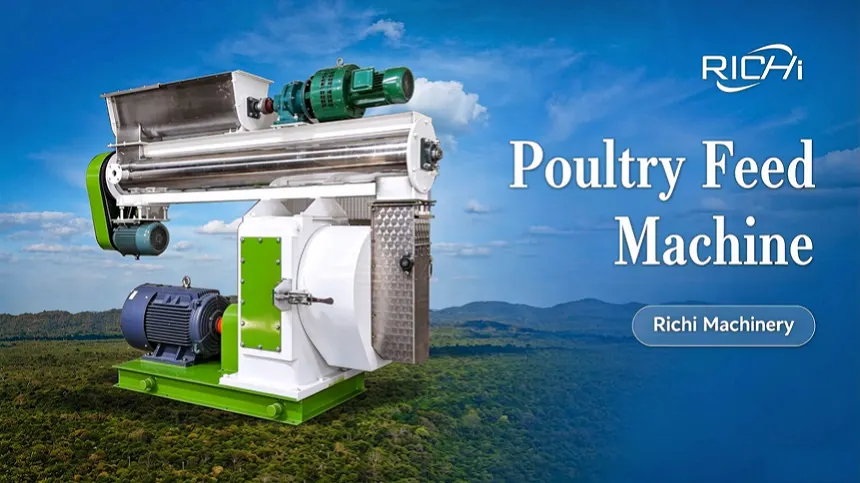
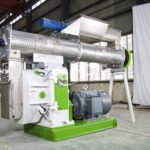
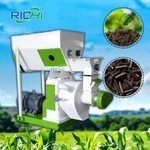
A poultry feed pellet machine is the centerpiece of this transformation. It is the equipment that turns raw mash into durable, consistent pellets. These machines come in different sizes and configurations, from small units suitable for a few thousand birds to large industrial systems that can process several tons per hour. The right choice depends on your flock size, your production goals, and your budget.
What to Look For in a Pellet Machine
Not all pellet machines are created equal. A cheap machine may produce soft, crumbly pellets that fall apart in the feeder. A well-built machine produces dense, durable pellets that hold together during handling and transport. The difference lies in the components.
The die is the most important part. It is a thick metal ring with precision-drilled holes. The material is forced through those holes by rollers. The die must be made from wear-resistant alloy. Poultry feed is abrasive, especially when it contains mineral supplements or fibrous by-products. A standard steel die will wear out quickly. A hardened die will last longer and produce more consistent pellets.
The conditioning system is also critical. Proper steam conditioning softens the fibers and activates the natural binders. Without adequate conditioning, the pellets will be weak and dusty. With too much conditioning, the material becomes sticky and can clog the die. The conditioner must be able to deliver the right amount of steam at the right temperature.
The drive system must be robust. Pelleting requires significant power. A machine with an undersized motor will struggle to maintain production. A machine with an oversized motor will waste energy. The motor must be matched to the die and the material. The control system should be easy to operate and maintain. It should allow the operator to adjust parameters as needed without constant supervision.
Scaling Up: The Industrial Option
For operations that produce feed at commercial scale, a single pellet machine is not enough. You need a complete system that integrates grinding, mixing, conditioning, pelleting, cooling, and screening. You need equipment that can run continuously, shift after shift, without breaking down.
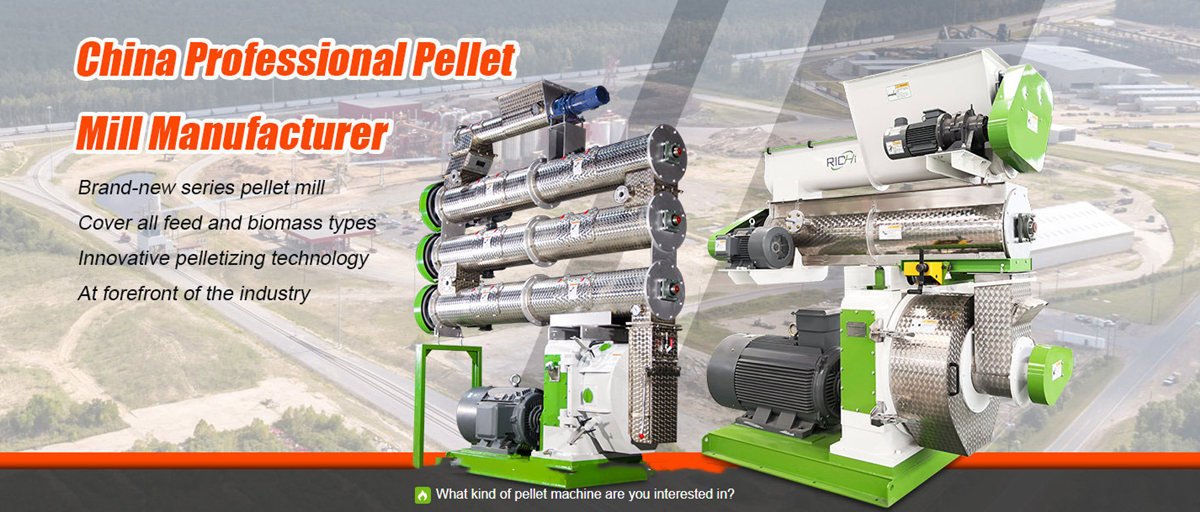
An industrial feed pellet machine for sale is designed for this level of production. These machines can process anywhere from one to forty tons per hour, depending on the configuration. They are built with heavy-duty components that can withstand the wear and tear of continuous operation. They include advanced control systems that monitor temperature, pressure, and feed rate. They are engineered for reliability and efficiency.
The investment in an industrial machine is significant. But the economics can be compelling. The per-ton cost of production decreases as volume increases. A large machine can produce feed at a lower cost per ton than a small machine. That cost advantage can be passed on to customers or retained as profit. For a feed mill or a large integrated poultry operation, the payback period is often measured in months, not years.
Of course, the machine alone is not enough. You need the supporting equipment: the grinder, the mixer, the conditioner, the cooler, and the screener. You need conveyors and bins to move material between stages. You need a control system that ties it all together. You need a building to house it and a power supply to run it. The total investment is substantial. But so is the potential return.
The Manufacturer Matters
The equipment is only part of the equation. The manufacturer behind it matters just as much. A company that understands poultry feed production can help you design a line that fits your operation. They can recommend the right capacity, the right die configuration, and the right level of automation. They can provide installation, training, and support.
RICHI pellet mill has been building feed processing equipment for decades. They have worked with poultry producers, feed mills, and cooperatives in many countries. They understand that poultry feed is not the same as cattle feed or pig feed. The nutritional requirements are different. The physical characteristics are different. The processing parameters are different. Their equipment is designed to handle those differences.
Their pellet mills are built with wear-resistant dies, precision rollers, and robust drive systems. Their conditioners are engineered for consistent steam delivery. Their cooling systems are sized for the throughput. They also offer a range of capacities, from small machines for on-farm use to complete industrial lines for commercial production. And they provide the support that keeps operations running—installation, training, spare parts, and technical assistance.
The Economics of Pelleting
The decision to invest in pelleting equipment is ultimately an economic one. The costs include the equipment, installation, energy, labor, and maintenance. The benefits include reduced waste, improved feed conversion, better flock uniformity, and greater control over quality.
For many operations, the savings from reduced waste alone are enough to justify the investment. If you are currently wasting 10% of your feed, and pelleting reduces that waste to 2%, you are saving 8% of your feed cost. For a farm spending $100,000 a year on feed, that is $8,000 in annual savings. Over five years, that is $40,000—enough to pay for a significant portion of the equipment.
Add the improvements in feed conversion, and the returns become even more attractive. Birds that eat consistent, high-quality pellets grow more evenly, convert feed more efficiently, and reach market weight faster. The payback period for a pelleting line is often measured in months, not years.
What to Consider Before You Buy
Before you invest in a pellet machine, take the time to understand your needs. What is your flock size? What is your production goal? What is your budget? What is your available power supply? What is your available space? These answers will determine the type and size of the equipment you need.
It also helps to talk to other producers who have already made the switch. Ask them about their experience. What machine did they buy? What capacity did they choose? What problems did they encounter? What support did they receive? Their answers will give you a realistic picture of what to expect.
And do not forget the importance of testing. Before you commit to a large investment, run a trial with a small machine or a demonstration unit. See how your feed performs. Check the pellet quality. Check the feed conversion. Check the bird health. A small trial can give you confidence before you make a full commitment.
The Bottom Line
Feed is the largest cost in poultry production. It is also the factor that most directly affects flock performance. When you control the feed, you control the outcome. Pelleting gives you that control. It reduces waste, improves digestibility, and ensures that every bird gets the nutrition it needs.
The technology is proven. The equipment is available. The question is whether you are ready to take the next step. If you are tired of watching your feed bill climb while your birds sort through their rations, it may be time to consider a different approach. The answer might be simpler than you think.