Introduction: Understanding Modern Aquatic Feed Manufacturing
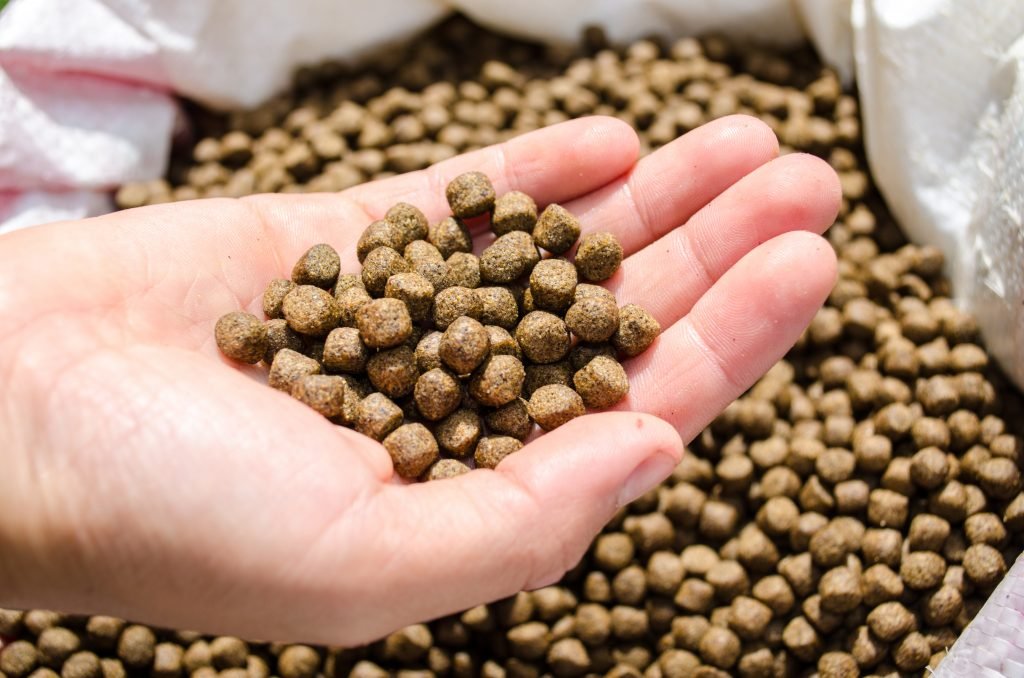
Aquaculture has become one of the most important sources of animal protein worldwide. With the rapid expansion of fish farming, shrimp farming, and other aquatic farming industries, the demand for high-quality aquatic feed continues to increase. Feed quality directly affects aquatic animal growth, feed conversion efficiency, farming costs, and water quality management.
Unlike ordinary animal feed production, aquatic feed manufacturing requires stricter control over pellet density, water stability, nutritional balance, and digestibility. Fish and other aquatic animals live in water environments, meaning feed pellets must maintain their structure after entering water while allowing animals to consume nutrients efficiently.
The aquatic feed production process is a series of carefully designed steps that transform raw materials into nutritious and durable feed pellets. From raw material preparation and grinding to mixing, extrusion, drying, and packaging, every stage influences the final feed performance.
Modern aquatic feed plants usually rely on advanced machinery, especially floating fish feed extrusion equipment, to produce floating, sinking, and slow-sinking feeds with consistent quality. Understanding the complete production process helps investors, feed manufacturers, and aquaculture operators choose suitable technologies and improve production efficiency.
1. Raw Material Selection for Aquatic Feed Production
The first step in aquatic feed production is selecting suitable raw materials. The nutritional composition of feed determines the growth performance and health of aquatic animals, so manufacturers must carefully choose ingredients based on the requirements of different species.
Common raw materials used in aquatic feed include:
- Fish meal
- Soybean meal
- Corn
- Wheat flour
- Rice bran
- Wheat bran
- Rapeseed meal
- Vegetable protein sources
- Fish oil
- Animal protein ingredients
- Vitamins and minerals
Different aquatic species have different nutritional requirements.
For example:
- Carnivorous fish usually require higher protein levels from sources such as fish meal and animal protein.
- Herbivorous or omnivorous fish can utilize more plant-based ingredients.
- Shrimp feed requires excellent water stability because shrimp often consume feed slowly.
In addition to nutritional value, raw materials must meet quality standards regarding moisture content, freshness, contamination control, and storage conditions.
Proper raw material selection creates the foundation for producing high-performance aquatic feed pellets.
2. Raw Material Cleaning and Preparation
Before entering the production system, raw materials need to be cleaned and prepared. Foreign materials such as stones, metal particles, dust, and other impurities may damage processing equipment and reduce feed quality.
Cleaning equipment is used to remove unwanted materials through processes such as:
- Screening
- Magnetic separation
- Dust removal
Metal separators are especially important because small metal particles can cause serious damage to grinders and processing machines.
After cleaning, raw materials are stored separately according to their characteristics. Proper storage prevents moisture absorption, mold growth, and nutrient loss.
For large-scale aquatic feed factories, automated storage and conveying systems help maintain a stable supply of materials and improve production efficiency.
3. Crushing and Grinding Process
Grinding is an important stage in aquatic feed production because particle size directly affects pellet quality and digestibility.
Large raw materials cannot be directly processed into feed pellets. They must first be crushed into smaller particles to improve mixing efficiency and processing performance.
Hammer mills or other grinding machines are commonly used for this purpose.
The advantages of proper grinding include:
- Better nutrient distribution
- Improved pellet formation
- Higher digestibility
- More stable extrusion performance
For small fish feed pellets, finer grinding is usually required because young fish have smaller digestive systems. Larger aquatic animals may accept slightly larger particles.
The particle size must be carefully controlled according to the final feed specifications.
4. Ingredient Batching and Accurate Weighing
After grinding, different ingredients are measured according to the designed feed formula.
Accurate batching is essential because even small changes in ingredient ratios can affect:
- Protein content
- Energy levels
- Pellet quality
- Fish growth performance
Modern aquatic feed plants often use automatic batching systems controlled by software. These systems can accurately measure different ingredients and reduce human errors.
Compared with manual weighing, automated batching provides:
- Higher accuracy
- Faster production speed
- Improved formula consistency
- Reduced labor costs
For commercial feed manufacturers producing multiple feed formulas, automatic batching systems are especially valuable.
5. Mixing Process for Uniform Nutrition Distribution
Once ingredients are accurately weighed, they enter the mixing stage.
The purpose of mixing is to ensure that all ingredients are evenly distributed throughout the feed mixture. Uniform mixing prevents nutritional differences between individual pellets.
During mixing, manufacturers may add:
- Oils
- Enzymes
- Vitamins
- Minerals
- Functional additives
High-quality mixers create a homogeneous mixture that improves pellet quality during extrusion.
Poor mixing can cause:
- Uneven nutrient distribution
- Inconsistent pellet quality
- Reduced feed performance
Therefore, efficient mixing equipment is an essential part of a professional aquatic feed production line.
6. Conditioning Before Extrusion
Before extrusion, the feed mixture usually goes through a conditioning process.
Conditioning involves adding moisture and heat to prepare the material for extrusion.
Steam and water are commonly used to improve:
- Material flexibility
- Starch gelatinization
- Pellet formation
- Nutrient availability
Proper conditioning helps the extrusion process operate more efficiently and improves the physical quality of final pellets.
The conditioning parameters depend on:
- Feed formula
- Raw materials
- Desired pellet characteristics
- Target aquatic species
A well-controlled conditioning process is an important factor in producing durable aquatic feed.
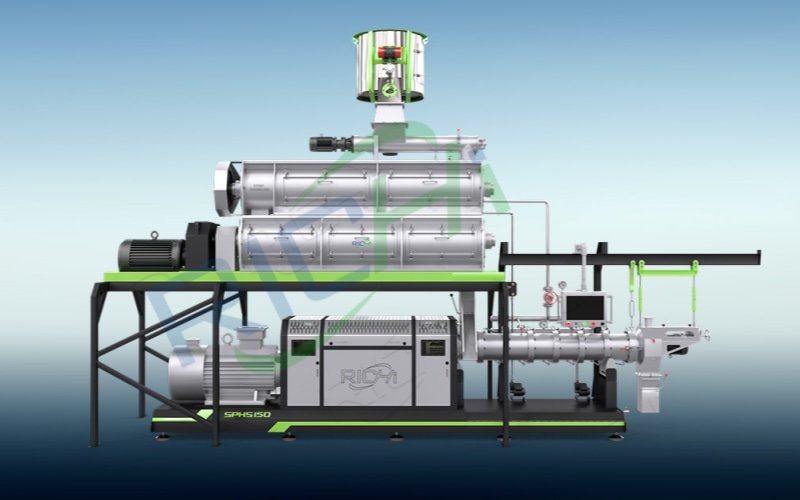
7. Extrusion: The Core Process of Aquatic Feed Production
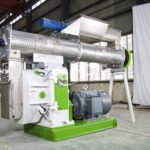
Extrusion is the most critical stage in modern aquatic feed manufacturing. It determines pellet structure, density, floating ability, and water stability.
During extrusion, feed materials are exposed to:
- High temperature
- High pressure
- Mechanical shear force
These conditions transform the raw mixture into expanded feed pellets.
The extrusion process provides several benefits:
- Improved starch digestibility
- Reduced harmful microorganisms
- Enhanced pellet durability
- Better nutrient utilization
- Adjustable pellet buoyancy
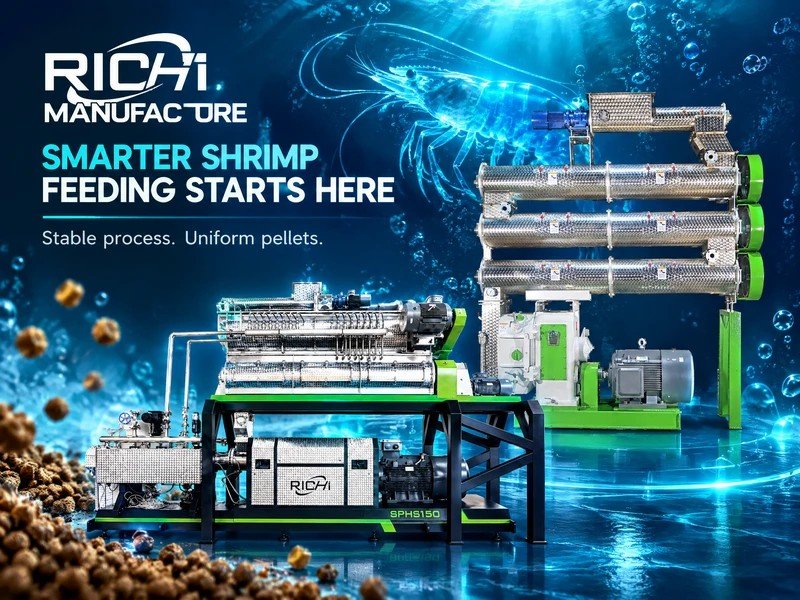
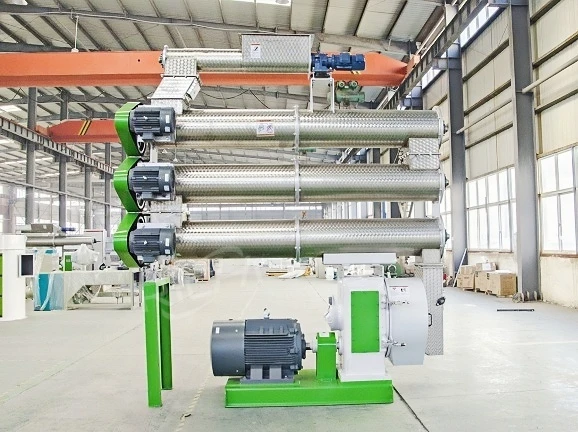
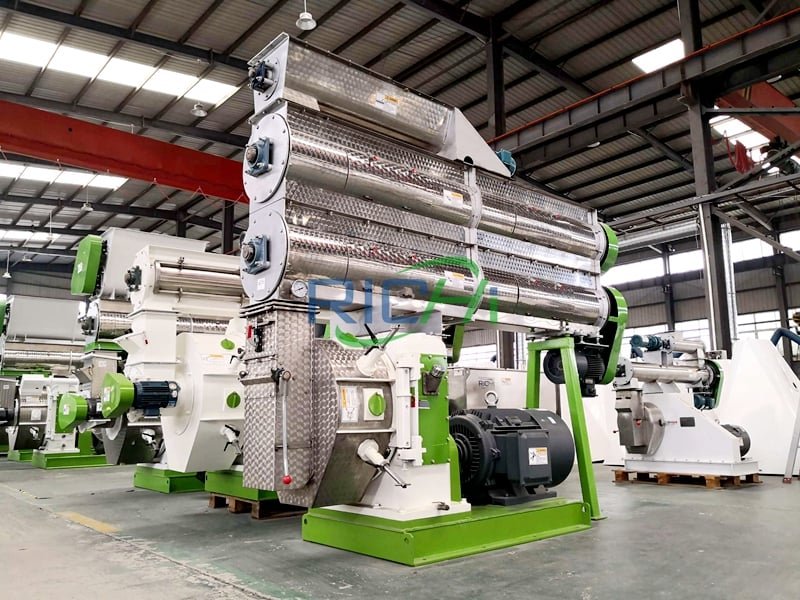
The use of advanced fish feed extrusion equipment allows manufacturers to produce different types of aquatic feed, including:
- Floating fish feed
- Sinking fish feed
- Slow-sinking feed
- Special feed for shrimp and other aquatic species
By adjusting processing parameters and using different dies, manufacturers can control pellet size, shape, and density.
For example, floating feed requires greater expansion and lower density, while sinking feed requires a more compact structure.
https://richipelletizer.com/floating-fish-feed-extruder-machine
8. Drying Process After Extrusion
Freshly extruded feed pellets contain relatively high moisture content and cannot be packaged immediately. Drying is required to remove excess moisture and improve storage stability.
The drying process helps:
- Extend shelf life
- Prevent mold growth
- Maintain pellet strength
- Reduce storage losses
Modern drying systems use controlled hot air circulation to achieve uniform moisture reduction.
Over-drying may damage nutrients, while insufficient drying can cause spoilage. Therefore, temperature and drying time must be carefully controlled.
A professional aquatic feed production line usually integrates automatic drying equipment to ensure consistent product quality.
9. Cooling and Screening
After drying, feed pellets remain warm and need to be cooled before packaging.
Cooling removes remaining heat and stabilizes pellet structure.
The cooling process helps prevent:
- Moisture condensation
- Pellet deformation
- Quality deterioration during storage
After cooling, pellets are screened to remove:
- Broken pellets
- Excess powder
- Irregular particles
Qualified pellets are collected for packaging, while unqualified materials can often be recycled back into production.
This step improves product appearance and ensures customers receive consistent feed quality.
10. Packaging and Storage of Aquatic Feed
The final stage of aquatic feed production is packaging.
Proper packaging protects feed from:
- Moisture
- Oxygen exposure
- Contamination
- Physical damage
Common packaging methods include:
- Bag packaging
- Bulk storage
- Automatic weighing and sealing systems
Packaging size depends on market requirements. Small bags are commonly used for farms and retail markets, while bulk packaging is preferred by large aquaculture operations.
During storage, feed should be kept in dry, ventilated areas to maintain quality.
11. Quality Control Throughout the Production Process
Quality control is essential throughout the entire aquatic feed production process.
Manufacturers usually test:
Nutritional Quality
Including:
- Protein content
- Fat content
- Fiber level
- Mineral composition
Physical Quality
Including:
- Pellet size
- Pellet hardness
- Floating time
- Water stability
Safety Indicators
Including:
- Microbial contamination
- Moisture content
- Harmful substances
Continuous quality monitoring ensures that feed meets the nutritional requirements of aquatic animals and satisfies market standards.
12. Advantages of Using Complete Aquatic Feed Production Lines
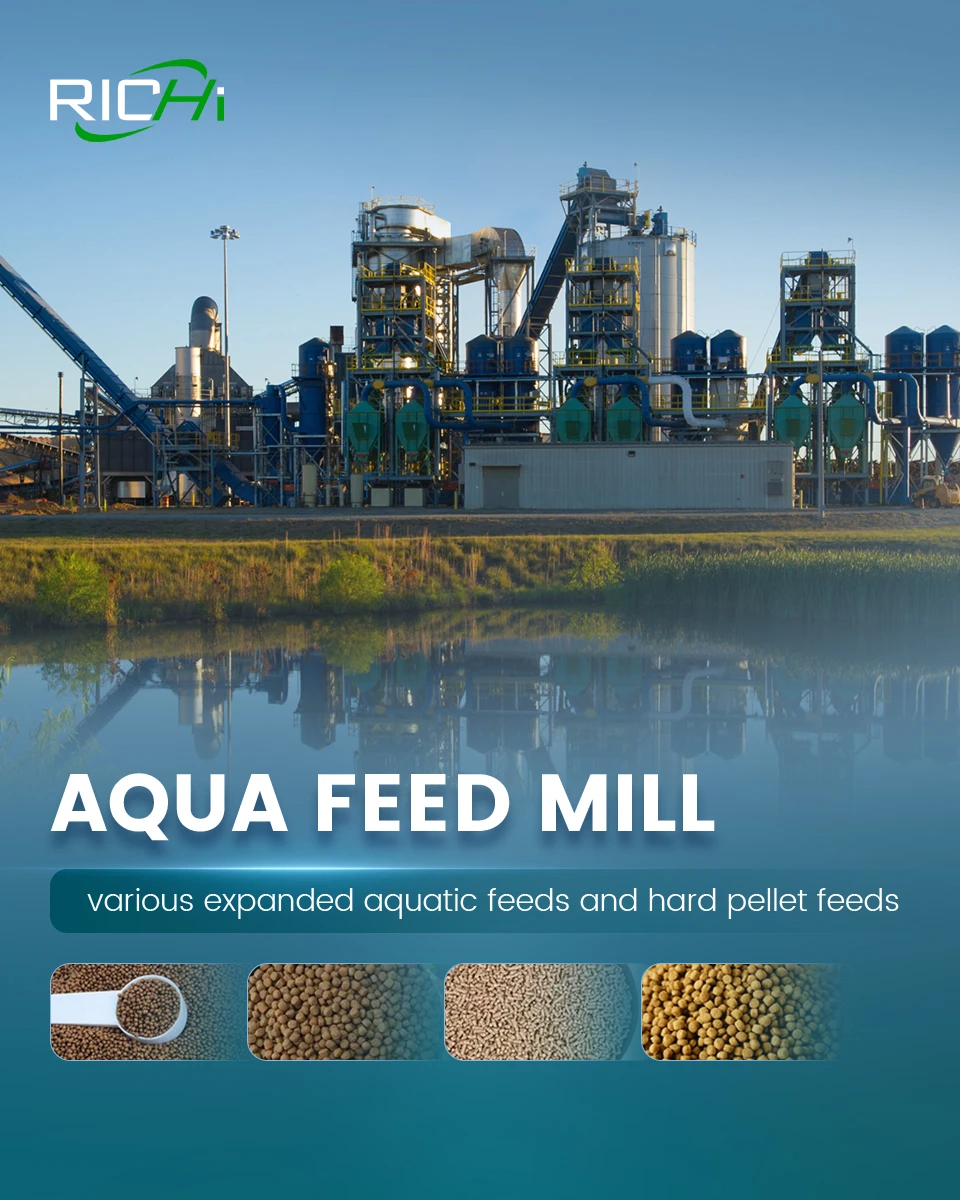
A complete aquatic feed production line integrates multiple machines into a continuous production system.
Typical equipment includes:
- Cleaning machines
- Crushers
- Mixing machines
- Batching systems
- Conditioners
- Fish feed extrusion equipment
- Dryers
- Coolers
- Screening machines
- Packaging systems
Compared with individual machines, complete production lines offer:
Higher Production Efficiency
Automated processes reduce downtime and improve output.
Stable Product Quality
Each production stage is accurately controlled.
Lower Labor Requirements
Automation reduces dependence on manual operation.
Better Production Management
Operators can monitor production data and optimize performance.
For commercial feed manufacturers, complete solutions provide a reliable foundation for expanding production capacity.
(Learn more about modern aqua feed plant)
13. How to Choose Suitable Fish Feed Extrusion Equipment
Selecting the right extrusion equipment is important for achieving efficient aquatic feed production.
Factors to consider include:
Production Capacity
Small farms may require compact machines, while industrial feed factories need high-capacity systems.
Feed Type
Different extrusion configurations are needed for floating, sinking, or specialty feeds.
Raw Materials
The formula and ingredient characteristics influence equipment selection.
Automation Requirements
Automatic control systems improve production stability and reduce operating costs.
Energy Efficiency
Efficient machines help reduce long-term production expenses.
Working with an experienced feed machinery manufacturer allows investors to obtain customized solutions based on production goals.
Conclusion: A Complete Process Creates High-Quality Aquatic Feed
The aquatic feed production process involves multiple carefully controlled stages, from raw material preparation to final packaging. Each step plays an important role in determining feed quality, nutritional value, and production efficiency.
Among all processing technologies, extrusion is the key technology that allows manufacturers to produce high-performance aquatic feed with excellent floating ability, durability, and digestibility. Advanced fish feed extrusion equipment provides manufacturers with the flexibility to produce different feed types for various aquatic species.
As global aquaculture continues to expand, efficient feed production will become increasingly important. By adopting modern processing technology and complete production solutions, feed manufacturers can improve product quality, reduce costs, and support the sustainable development of the aquaculture industry. (Richi Machinery)