

Shrimp farming has grown from a coastal side business into one of the most organized segments of global aquaculture. In countries like Ecuador, Vietnam, India, Indonesia, and Thailand, shrimp exports now support entire regional economies. But behind every container of frozen shrimp leaving a port is a feed supply chain that has to work consistently, day after day, pond after pond.
Feed is the single largest operating cost in shrimp farming. Depending on the system and intensity, it can account for 50% to 70% of total production expenses. That number alone explains why shrimp producers pay close attention to feed quality, feed conversion ratios, and the reliability of their feed suppliers. It also explains why more farms and cooperatives are looking upstream at how feed is actually made.
This article looks at the relationship between shrimp farming and feed production. It covers raw materials, processing steps, equipment selection, cost pressure, and the practical decisions that come with building or upgrading a shrimp feed line.
Why Shrimp Feed Is Different from Other Aqua Feed
Shrimp are not fish. They feed differently, digest differently, and behave differently in water. A shrimp feed that works well in a tilapia pond will not perform the same way in a shrimp pond.
The most obvious difference is feeding behavior. Shrimp are slow, bottom-dwelling feeders. They do not rush to the surface to grab pellets. They find feed by touch and chemical cues, and they may take several minutes to consume a single pellet. If a pellet breaks down too quickly in water, it is lost before the shrimp can eat it.
This is why water stability is one of the most important quality criteria for shrimp feed. A pellet needs to hold its shape for hours, not minutes. It needs to stay intact long enough for the shrimp to find it and consume it. At the same time, it must be soft enough and palatable enough that shrimp actually want to eat it.
There is also the question of particle size. Shrimp go through multiple molting stages, and their mouth size changes as they grow. Feed producers typically supply different pellet sizes for different growth stages, from fine crumbles for post-larvae to larger pellets for grow-out. Getting this graduation right is not optional. If the pellet is too large, the shrimp cannot eat it. If it is too small, it dissolves before it can be consumed.
Nutritionally, shrimp feed also differs from fish feed. Shrimp require specific levels of protein, cholesterol, phospholipids, and minerals. They have limited ability to synthesize certain nutrients, so the feed must supply them. This puts pressure on raw material selection and on the precision of the mixing and extrusion process.
The Raw Materials Behind a Shrimp Feed Formula
A typical shrimp feed formula combines several categories of ingredients. Each one plays a role, and each one brings its own processing challenges.
Protein sources form the backbone. Fishmeal has traditionally been the preferred protein for shrimp feed because of its amino acid profile and palatability. However, fishmeal prices have risen sharply over the past two decades, and supply is unpredictable. This has pushed producers to look at alternatives such as soybean meal, poultry by-product meal, krill meal, and single-cell proteins. Each substitute changes the extrusion behavior of the mix, and each one affects water stability.
Energy sources come mainly from starches and lipids. Wheat flour, tapioca starch, and corn starch are common binders. They also affect pellet expansion and durability. In extrusion, starch gelatinization helps hold the pellet together. If the starch content is too low, the pellet may be weak. If it is too high, the pellet may become too hard or too buoyant for bottom-feeding shrimp.
Lipids provide essential fatty acids and energy. Fish oil, squid oil, and vegetable oils are common. Lipids are usually added after extrusion, through vacuum coating, because high heat during extrusion can damage sensitive fatty acids. This coating step is critical for shrimp feed because it affects both nutrition and water stability.
Additives include vitamins, minerals, attractants, mold inhibitors, and binders. Attractants are particularly important for shrimp because they help the animal locate feed in murky pond water. Binders improve pellet integrity and reduce fines.
The exact formula depends on the species, the farming system, the target growth rate, and local raw material availability. A feed producer in Ecuador may use a very different formula from one in Vietnam, even if both are making feed for the same species. This is why feed mills need flexible equipment that can handle formula changes without major downtime.
How Shrimp Feed Is Actually Made
The production process for shrimp feed shares many steps with other aqua feed, but several stages require special attention.
Grinding comes first. Raw materials must be ground to a fine and consistent particle size. For shrimp feed, fine grinding is especially important because shrimp have small mouths and poor ability to digest coarse particles. A typical target is that most particles pass through a fine screen. Hammer mills and air-swept pulverizers are common choices. The fineness of the grind affects not only pellet quality but also how evenly nutrients are distributed in the final feed.
Mixing follows. This is where micronutrients, additives, and major ingredients are blended into a uniform batch. Uniformity matters more for shrimp feed than for many other feeds because the inclusion rates of some additives are very low. If mixing is poor, some pellets get too much of a nutrient and others get too little.
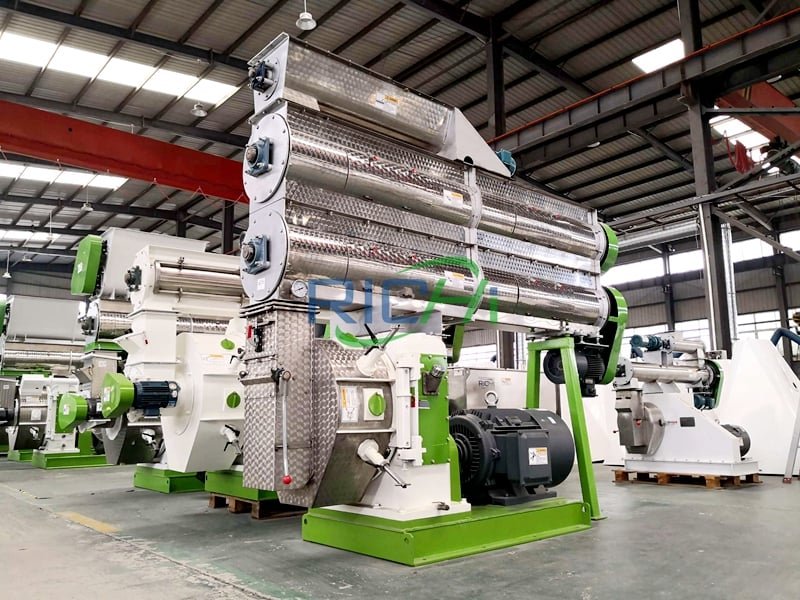
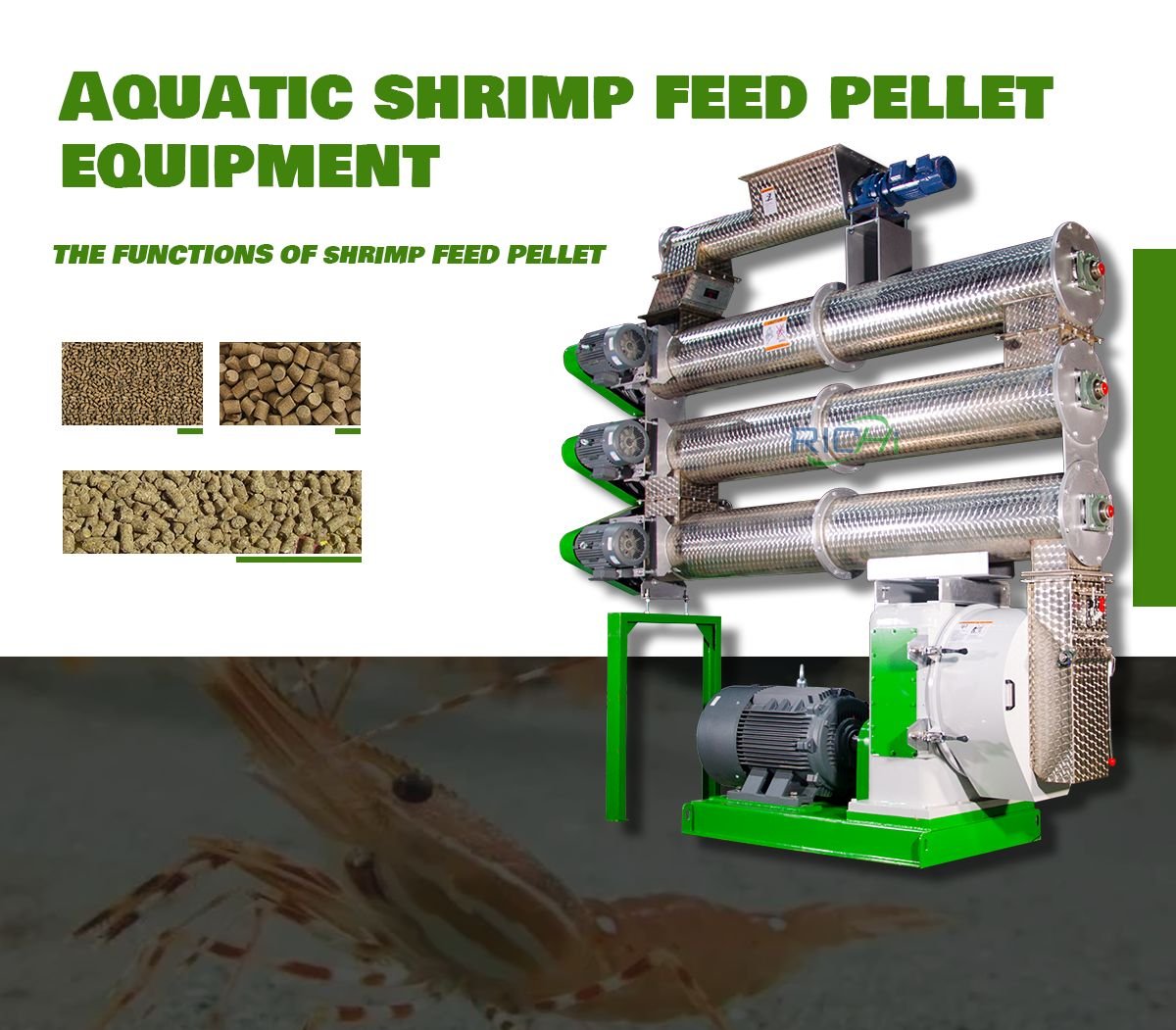
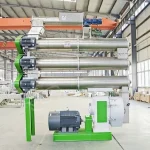
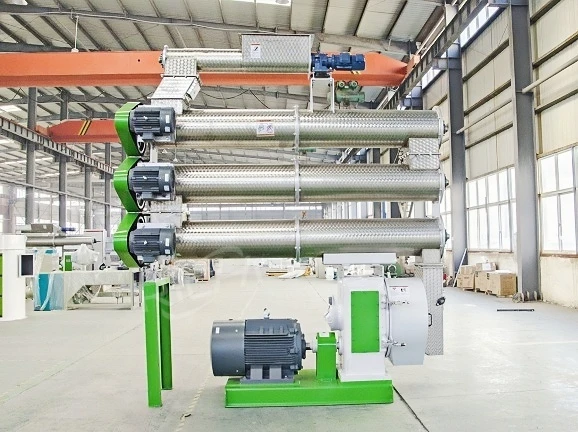
Extrusion is the core step. A shrimp feed making machine uses heat, moisture, and mechanical shear to cook the ingredients and form pellets. The extrusion process gelatinizes starch, denatures protein, and creates a pellet with controlled density and water stability. For shrimp feed, producers often aim for a denser, sinking pellet rather than a floating one. This requires different extruder settings than floating fish feed.
Drying removes moisture so the pellet can be stored without spoiling. Moisture content that is too high leads to mold. Too low leads to brittle pellets and more fines. Drying must be uniform, because uneven drying creates variation in pellet hardness and water stability.
Coating applies oil and sometimes additional additives to the surface of the pellet. Vacuum coating is preferred for shrimp feed because it pulls oil into the pellet rather than leaving it on the surface. Surface oil can wash off quickly in water and also causes pellets to stick together.
Cooling and packaging finish the process. The feed must be cooled to near ambient temperature before bagging, otherwise condensation inside the bag will cause spoilage.
Each of these steps affects the next. Poor grinding leads to poor extrusion. Poor extrusion leads to poor water stability. Poor drying leads to storage problems. A shrimp feed line is a chain, and the weakest link determines overall quality.
What Shrimp Farmers Actually Care About
Feed producers sometimes focus on pellet appearance or protein percentage. Farmers care about different things.
The first is feed conversion ratio, or FCR. This is the amount of feed required to produce one kilogram of shrimp. A lower FCR means less feed per kilogram of shrimp, which directly reduces cost. FCR is influenced by feed quality, feeding management, pond conditions, and shrimp health. But feed quality sets the ceiling. If the feed is poorly digested or dissolves too quickly, no amount of feeding skill will fix the FCR.
The second is water stability. Farmers notice when feed breaks down quickly. They see it as waste on the pond bottom, and they know it contributes to water quality problems. A pellet that holds together for several hours is worth more to them than a cheaper pellet that falls apart in thirty minutes.
The third is consistency. Shrimp are sensitive to changes in feed. A sudden change in pellet size, hardness, smell, or color can reduce feeding response. Farmers want the same product, batch after batch. This puts pressure on feed mills to control their process tightly and to source raw materials consistently.
The fourth is cost per unit of shrimp produced, not cost per ton of feed. A cheaper feed that produces a higher FCR may actually cost more in the end. This is a subtle point, but it matters when farmers compare suppliers.
Building a Shrimp Feed Line: What Changes
Setting up a shrimp feed production line is not the same as setting up a general aqua feed line. Several design decisions are specific to shrimp feed.
Sinking vs. floating. Most shrimp feed is sinking. This means the extruder and dryer configuration must be set up for denser pellets. Some producers also make a small amount of floating feed for specific stages, but the main line is usually designed around sinking pellets.
Fine grinding capacity. Shrimp feed requires finer grinding than many other feeds. This means more grinding capacity, more screening, and more attention to dust control. It also means higher energy consumption at the grinding stage.
Water stability testing. A shrimp feed line should include the ability to test water stability as part of routine quality control. This is not just a lab exercise. It is a practical check that tells the production team whether the process is under control.
Coating precision. Vacuum coating equipment needs to be accurate and repeatable. Over-coating wastes oil and can cause pellet clumping. Under-coating reduces nutritional value and palatability.
Formula flexibility. Shrimp feed formulas change more often than many people expect. Raw material prices shift, new ingredients become available, and customer requirements evolve. Equipment that cannot handle these changes easily becomes a bottleneck.
For producers who want a complete line rather than individual machines, working with a supplier who can handle project design, equipment integration, installation, and commissioning is usually more efficient than coordinating multiple vendors. This is where a commercial shrimp feed making machine solution becomes relevant. It is not just about one machine. It is about how the grinding, mixing, extrusion, drying, coating, and cooling stages work together.
The Cost Side of Shrimp Feed Production
Feed production costs break down into several categories.
Raw materials are the largest cost, often 70% to 80% of total production cost. This is why feed mills spend so much time on procurement and formula optimization. Small changes in ingredient prices can have a large effect on the final cost per ton.
Energy is the second major cost. Grinding, extrusion, drying, and conveying all consume electricity or fuel. A well-designed line reduces energy waste through proper motor sizing, heat recovery, and process control. An oversized or poorly matched line wastes energy at every stage.
Labor is a significant cost in many regions, though automation can reduce it. Automated batching, centralized control, and automated packaging can lower labor requirements, but they require capital investment and skilled maintenance.
Maintenance and spare parts are ongoing costs that are often underestimated. Extruder screws, dies, hammers, and screens wear out over time. A line that is difficult to maintain or that relies on hard-to-source parts will have higher downtime and higher long-run costs.
Quality losses are indirect but real. If a batch fails water stability testing, it may need to be reworked or sold at a lower grade. If pellets break during conveying, fines reduce the effective yield. These losses add up over a year.
When evaluating a shrimp feed project, it helps to look at cost per ton over the life of the line, not just the purchase price of the equipment. A cheaper line that produces inconsistent feed or requires frequent repairs may cost more in the long run.
What Changes When Farms Scale Up
Small shrimp farms often buy feed from commercial mills. As farms grow, some decide to produce their own feed. This decision is not automatic, and it depends on several factors.
Volume. On-farm feed production makes sense when the farm consumes enough feed to justify the equipment and labor. Below a certain volume, the fixed costs are too high.
Control. Producing feed on-site gives the farm control over formula, freshness, and quality. This can be valuable for farms that want to adjust feed to specific pond conditions or growth stages.
Raw material access. On-farm production requires reliable access to raw materials at competitive prices. If the farm cannot buy ingredients cheaper than a commercial mill, the economics are difficult.
Technical capability. Feed production requires technical knowledge. Formulation, extrusion settings, drying, and quality control all require training and experience. Some farms hire specialist staff. Others rely on equipment suppliers for support.
Regulation. In some countries, on-farm feed production is subject to the same regulations as commercial feed production. This adds compliance costs.
For many mid-sized and large farms, the practical answer is a hybrid approach. They buy some feed from commercial mills and produce some on-site, using their own line for specific stages or specific formulas.
Quality Control That Actually Matters
Quality control in shrimp feed production should focus on the things that affect performance in the pond, not just on laboratory numbers.
Water stability is the first check. A simple test involves placing a known weight of pellets in water and measuring how long they hold their shape. This test should be run regularly, not once a month.
Pellet durability is the second. Durability testing measures how much fines are generated when pellets are handled. High fines mean waste and poor feeding response.
Moisture content is the third. Too much moisture leads to mold. Too little leads to brittle pellets. The target range depends on the product and the storage conditions.
Bulk density matters for sinking feed. If density varies too much, some pellets float and some sink too fast. This affects feeding efficiency.
Nutritional analysis confirms that the feed meets the formula specifications. This is usually done by an external lab, but routine in-house checks can catch problems early.
Microbiological testing is important for export-oriented producers. Salmonella and other pathogens can cause rejection at the border.
A feed mill that treats quality control as a checkbox exercise will eventually have problems. A mill that uses quality data to adjust its process will improve over time.
The Role of Automation
Automation in shrimp feed production is not just about reducing labor. It is about consistency.
Automated batching systems weigh ingredients precisely and reduce human error. Automated extrusion control adjusts steam, water, and screw speed to maintain consistent pellet quality. Automated drying control adjusts temperature and retention time based on moisture readings. Automated packaging reduces spillage and improves bag weight accuracy.
For shrimp feed, where small variations in pellet quality can affect feeding response, automation has a direct impact on product performance. It also makes it easier to trace batches and respond to customer complaints.
That said, automation is not free. It requires capital investment, skilled maintenance, and a willingness to change working practices. For some producers, the payback is clear. For others, it is not. The decision depends on volume, labor costs, and the target market.
Where the Industry Is Heading
Several trends are shaping shrimp feed production.
Fishmeal replacement continues to be a major area of research. As fishmeal prices rise and supply fluctuates, producers are testing alternative proteins. Some of these alternatives work well. Others require process adjustments. The shift is gradual but real.
Functional feeds are gaining attention. These are feeds designed to improve shrimp health, immune response, or stress tolerance, not just growth. They often include specialized additives, which places higher demands on mixing and coating equipment.
Sustainability pressure is increasing. Buyers in Europe and North America are asking about the environmental footprint of shrimp production, including feed. This is pushing producers to look at responsible sourcing, energy efficiency, and waste reduction.
Disease management is a constant concern. Shrimp are vulnerable to viral and bacterial diseases, and feed can be a vector. This has increased interest in feed sterilization, hygienic design, and quality control.
Digitalization is slowly entering feed mills. Sensors, data logging, and process analytics are becoming more common. The goal is to catch problems earlier and to optimize processes with real data rather than guesswork.
For equipment suppliers, these trends mean that flexibility and support matter as much as hardware. A feed mill that can adapt to new formulas, new ingredients, and new quality requirements will stay competitive. One that cannot will struggle.
Choosing Equipment and Partners
When selecting a shrimp feed making machine or a complete line, several practical questions come up.
What is the target capacity? This determines the size of each machine and the overall line layout. It is better to design for slightly higher capacity than the current need, because formulas and market demands change.
What pellet sizes are needed? Shrimp feed covers a range of sizes. The extruder and die configuration must support that range.
What raw materials will be used? Local availability and cost matter. The equipment must handle the intended ingredients, including any abrasive or high-fat materials.
How much automation is appropriate? This depends on labor costs, technical capability, and the target market. More automation is not always better. It has to match the operation.
What support is available? Installation, commissioning, training, and after-sales service are important. A supplier who can provide technical support during the project and after startup is more valuable than one who only sells equipment.
What is the total project cost? This includes not just equipment but also civil works, utilities, installation, training, and working capital. A realistic budget prevents surprises later.
Some buyers focus only on machine price and later find that the line does not perform as expected. Others invest in a well-designed project and see the benefits over years of operation. The difference usually comes down to planning. Working with an experienced manufacturer such as Richi Pellet Mill can make this planning stage more practical, because the equipment and process knowledge come from the same source.
For projects that involve complete line design, equipment integration, and commissioning, it often makes sense to work with a supplier who offers turnkey support. This reduces coordination problems and makes one party responsible for overall performance. If you are evaluating this kind of project, check this site out for more details on turnkey service options.
Common Mistakes in Shrimp Feed Projects
A few mistakes come up again and again.
Underestimating grinding requirements. Shrimp feed needs fine grinding. A mill designed for coarse grinding will struggle.
Ignoring water stability. A pellet that looks good in the mill may fail in the pond. Testing must be part of routine production.
Choosing equipment based on price alone. Cheap equipment often has higher downtime, higher maintenance costs, and lower product quality.
Skipping training. Operators who do not understand the extrusion process cannot adjust it when conditions change. Training is not optional.
Poor layout. A line that is cramped or poorly laid out creates bottlenecks and makes maintenance difficult.
No spare parts plan. Waiting for a critical part to arrive from overseas can shut down production for weeks. A spare parts plan should be part of the project from the beginning.
Ignoring local conditions. Humidity, temperature, power quality, and raw material characteristics vary by region. Equipment and processes should be adapted accordingly.
Avoiding these mistakes is not difficult, but it requires attention during planning and throughout the project.
Final Thoughts
Shrimp feed production sits at the intersection of aquaculture, nutrition, process engineering, and business. It is not just about buying a shrimp feed making machine and turning it on. It is about understanding what shrimp need, what farmers value, what raw materials are available, and how to build a line that produces consistent quality at a reasonable cost.
The farms and feed mills that do well are the ones that treat feed production as a system. They pay attention to raw materials, process control, quality testing, and maintenance. They invest in the right equipment and the right support. They adapt when markets and formulas change.
For anyone planning a shrimp feed project, the starting point is a clear understanding of the target market and the production requirements. From there, equipment selection, line design, and project execution follow. Getting the early decisions right saves time, money, and frustration later.