



Rice husk is one of the most abundant agricultural by-products generated during rice milling. Every year, large quantities of rice husk are produced in rice-growing regions, creating both an environmental challenge and an opportunity for biomass utilization. Instead of treating rice husk as waste, modern processing technology can convert it into dense, convenient, and valuable biomass fuel pellets.
A Rice Husk Pellet Mill is an important piece of equipment in this process. By compressing prepared rice husk under high mechanical pressure, the machine can transform loose biomass material into uniform pellets that are easier to transport, store, and use. Rice husk pellets can be used as a biomass fuel in suitable boilers, industrial heating systems, biomass burners, and other applications.
For agricultural enterprises, biomass fuel manufacturers, rice mills, and investors planning a biomass pellet production project, choosing the right pellet mill is an important decision. Production capacity, raw material characteristics, pellet density, energy consumption, equipment durability, and complete production line design all need to be considered.
This article explains how a Rice Husk Pellet Mill works, how rice husk pellets are produced, the advantages of pelletizing rice husk, and how to select suitable equipment. It also introduces the 3-4 T/H Rice Husk Pellet Mill as a practical capacity option for medium-scale biomass pellet production.
What Is a Rice Husk Pellet Mill?
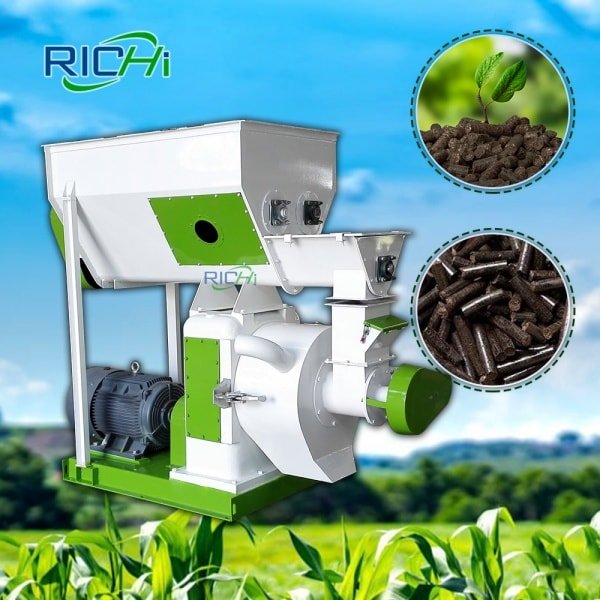
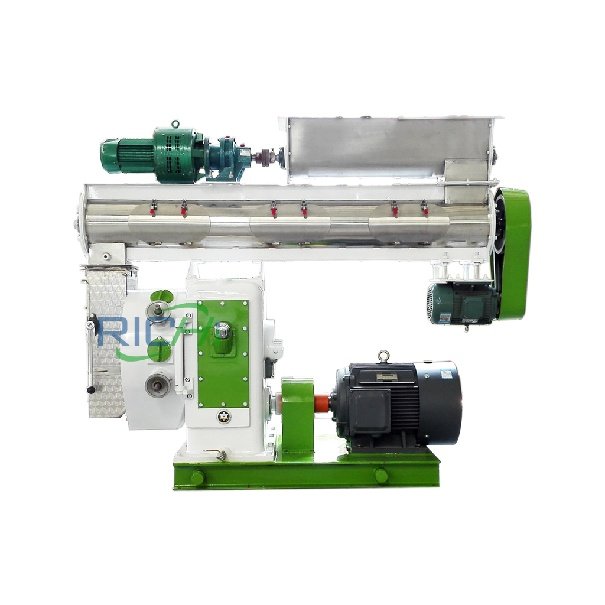
A Rice Husk Pellet Mill is a biomass pelletizing machine designed to compress rice husk and other suitable agricultural residues into cylindrical biomass pellets.
Rice husk has a relatively low bulk density when it is loose. This creates difficulties during transportation and storage because a large volume of material may be required to hold a comparatively small amount of biomass.
Pelletizing addresses this problem by compressing the material into a much denser form.
During the pelletizing process, prepared rice husk is fed into the pellet mill. A rotating die and roller system applies pressure to the material and forces it through die holes. The compressed material forms continuous strands that are cut into pellets by a cutting system.
The result is a relatively uniform biomass fuel with a standardized shape and improved handling characteristics.
The final pellet diameter depends largely on the die specifications, while pellet length can be adjusted through the cutting system.
Why Pelletize Rice Husk?
Rice husk is naturally lightweight and difficult to handle efficiently in its loose form. Pelletizing offers several practical benefits.
Higher Bulk Density
One of the primary benefits is increased bulk density. Loose rice husk takes up significant storage space, while compressed pellets require less volume for the same mass of material.
This can make transportation and warehouse management more convenient.
Easier Transportation
Uniform pellets are easier to convey, load, unload, and transport than loose agricultural residues.
They can be moved using belt conveyors, screw conveyors, bucket elevators, and other mechanical conveying systems.
Improved Storage
Pellets can be stacked and stored more efficiently than loose rice husk when they are properly produced, cooled, and stored under suitable conditions.
Good storage management can help protect the pellets from moisture and contamination.
Standardized Fuel
Pelletizing converts irregular loose material into a more uniform fuel product.
This makes automated feeding into suitable biomass combustion equipment easier to manage.
Agricultural Waste Utilization
Rice husk pellet production provides a way to add value to an agricultural by-product.
Instead of allowing large quantities of rice husk to accumulate around rice mills, businesses can process the material into a marketable biomass fuel.
How Does a Rice Husk Pellet Mill Work?
The pelletizing process generally includes several stages. The exact configuration depends on raw material characteristics and the desired production capacity.
1. Raw Material Collection
The process starts with the collection of rice husk from rice mills or agricultural processing facilities.
Raw material should be relatively clean and free from stones, metal, plastic, and other foreign materials.
A cleaning system may be installed before further processing to protect the equipment and improve final product quality.
2. Crushing or Grinding
Depending on the characteristics of the rice husk, a crushing or grinding process may be required.
The purpose is to achieve an appropriate and relatively uniform particle size for pelletizing.
Rice husk is already relatively fine compared with many other biomass materials, but the required preparation depends on the source material and pellet mill configuration.
3. Moisture Adjustment
Moisture content is one of the most important factors in biomass pellet production.
If the rice husk is too dry, it may not bind properly during pelletizing. If it contains excessive moisture, pellet formation and final product stability can be affected.
Therefore, moisture should be measured and adjusted when necessary.
A rotary dryer or other biomass drying system may be used if the incoming material contains excessive moisture.
4. Feeding
Prepared rice husk is transported into the pellet mill through a controlled feeding system.
Stable feeding is important because inconsistent material flow can cause fluctuations in production capacity and pellet quality.
5. Pelletizing
The prepared rice husk enters the Rice Husk Pellet Mill.
Inside the pellet chamber, rollers compress the material against the die. Under pressure, the biomass is forced through the holes in the die.
Natural lignin and other components in the biomass can contribute to binding under appropriate pelletizing conditions.
The compressed material exits the die in continuous strands and is cut into pellets.
6. Cooling
Fresh biomass pellets are generally warm after leaving the pellet mill.
A pellet cooler is used to reduce the temperature and stabilize the pellets.
Cooling also helps remove some remaining moisture and improves the handling characteristics of the finished product.
7. Screening
A screening machine separates properly formed pellets from fines and irregular particles.
Fines can often be recycled back into the production process, helping reduce material waste.
8. Packaging or Bulk Storage
Finished rice husk pellets can be packed into bags or transported directly into bulk storage systems.
The appropriate packaging method depends on the target market, transportation requirements, and customer preferences.
Key Features of Rice Husk Pellets
The characteristics of rice husk pellets depend on the raw material, pelletizing conditions, die configuration, moisture content, and equipment.
Several characteristics are particularly important for commercial applications.
Pellet Diameter
Common pellet sizes vary according to the intended application and combustion equipment.
A suitable die can produce pellets with consistent diameters.
Pellet Length
Pellet length can be adjusted through the cutting system. Uniform length is useful for automated feeding and packaging.
Density
Compression increases the density of rice husk compared with its loose form.
Higher density can improve handling and reduce the storage volume required for a given quantity of biomass.
Mechanical Durability
Good-quality pellets should have sufficient strength to withstand normal transportation and handling without excessive breakage.
Moisture
Moisture needs to be controlled carefully during production and storage. Excess moisture can negatively affect pellet stability and storage performance.
3-4 T/H Rice Husk Pellet Mill
For investors and biomass fuel producers planning medium-scale production, the 3-4 T/H Rice Husk Pellet Mill can be an attractive capacity option.
A machine with a nominal capacity of 3 to 4 tons per hour can provide substantial production potential for businesses that have a stable supply of rice husk.
For example, if a pellet mill operates at an average output of 3 tons per hour for eight hours, the theoretical production is approximately 24 tons per day. At 4 tons per hour, the theoretical output could reach approximately 32 tons during eight hours of operation.
Actual production will vary depending on raw material moisture, particle size, machine configuration, pellet specifications, downtime, and operating conditions.
Therefore, buyers should distinguish between nominal machine capacity and actual long-term production output.
A suitable production line should also include equipment with matching capacities. If the dryer, cooler, conveyor, or screening system cannot handle the output of the pellet mill, the entire production line may become a bottleneck.
Advantages of a 3-4 T/H Production Capacity
A 3-4 T/H capacity can be suitable for several types of biomass businesses.
Suitable for Medium-Scale Production
This capacity provides a balance between production volume and equipment investment.
It can be appropriate for businesses that have sufficient rice husk resources but do not require a very large industrial pellet production system.
Better Utilization of Rice Husk Resources
Rice mills can generate large quantities of husk every day. A medium-capacity pellet production line can process a substantial portion of this material into a standardized fuel product.
Continuous Commercial Operation
A properly configured production line can operate continuously for extended production periods, supporting commercial supply contracts and regular biomass fuel production.
Potential for Future Expansion
Businesses can plan future expansion by reserving adequate workshop space, utilities, storage areas, and material handling capacity.
When designing a new factory, it is often useful to consider future production requirements rather than only current demand.
Rice Husk Pellet Mill Production Line
A Rice Husk Pellet Mill normally works as part of a complete biomass pellet production line.
A typical production system may include:
- Raw material receiving system
- Magnetic separator and cleaning equipment
- Crushing or grinding equipment
- Moisture testing and adjustment system
- Dryer
- Material conveying system
- Rice husk pellet mill
- Pellet cooler
- Pellet screener
- Finished pellet conveying system
- Packaging machine
- Finished product storage
The actual configuration depends on the moisture content and particle characteristics of the rice husk.
If the raw material already has an appropriate particle size and moisture level, some processing stages may be simplified.
The Importance of Raw Material Moisture
Moisture is one of the most important variables in biomass pellet production.
Rice husk with excessive moisture may require drying before entering the pellet mill. High moisture can increase energy consumption and affect pellet formation.
On the other hand, excessively dry material may not form strong pellets efficiently.
For this reason, operators should monitor moisture throughout the production process.
A moisture meter can be useful for checking incoming raw material and finished pellets.
The ideal moisture level varies according to the raw material, machine, die, and production conditions, so equipment settings should be established through proper testing and manufacturer recommendations.
The Role of the Die
The die is one of the most important components of a pellet mill.
It determines the diameter of the pellet and influences the compression ratio of the material.
Different biomass materials have different pelletizing characteristics. Therefore, die selection should be based on the characteristics of rice husk and the desired final product.
A suitable die can help achieve stable pellet formation, while an unsuitable configuration may increase power consumption or reduce production efficiency.
Dies are wear components and should be inspected regularly.
When die holes become excessively worn, pellet quality and production performance may decline.
Ring Die and Flat Die Pellet Mills
Biomass pellet mills are generally available in different structural configurations.
Flat die pellet mills are often used for smaller production applications and can have relatively simple structures.
Ring die pellet mills are commonly used for larger commercial production because they can provide high and continuous production capacity.
For a 3-4 T/H Rice Husk Pellet Mill, the appropriate design depends on the specific production requirements, raw material conditions, factory layout, and investment plan.
Businesses should discuss these factors with the equipment manufacturer before selecting a machine.
How to Improve Rice Husk Pellet Quality
Several production factors can influence pellet quality.
Maintain Appropriate Moisture
The moisture content of the raw material should be controlled consistently.
Large fluctuations in moisture can cause changes in pellet density, durability, and production efficiency.
Keep Particle Size Uniform
If the material contains excessively large particles, pellet formation may become less consistent.
Appropriate grinding or screening can help maintain a more uniform feedstock.
Maintain the Pellet Mill
The die and rollers should be inspected regularly.
Worn components can reduce production efficiency and affect pellet quality.
Lubrication should also be performed according to the equipment manufacturer’s maintenance schedule.
Control Feeding Rate
The feeding system should supply material steadily.
Overfeeding can increase machine load, while underfeeding may reduce production efficiency.
Cool Pellets Properly
Fresh pellets should be cooled before packaging or long-term storage.
Proper cooling helps stabilize the pellets and reduce the risk of condensation during storage.
Energy Consumption Considerations
Energy efficiency is an important issue for biomass pellet manufacturers.
The main pellet mill motor consumes a significant amount of electricity, but total production energy also includes drying, conveying, cooling, crushing, screening, and packaging.
If the rice husk has high moisture content, drying can become one of the largest energy-consuming stages.
Therefore, manufacturers should consider the complete energy balance of the production line.
Using properly sized equipment, maintaining components, reducing unnecessary conveying distances, and controlling moisture can all contribute to improved efficiency.
Storage of Rice Husk Pellets
After production, pellets should be protected from moisture.
Although pelletized rice husk is easier to store than loose material, improper storage conditions can still affect quality.
A suitable warehouse should be dry, clean, and well ventilated.
Finished pellets should be protected from rain, groundwater, and excessive humidity.
For large-scale operations, bulk storage silos or dedicated storage buildings may be used.
The storage method should be selected according to production volume and transportation requirements.
Applications of Rice Husk Pellets
Rice husk pellets can be used in various biomass energy applications, depending on local regulations, combustion equipment, and fuel specifications.
Potential applications include:
- Industrial biomass boilers
- Agricultural heating systems
- Suitable biomass burners
- Commercial heating applications
- Certain industrial thermal processes
- Biomass fuel distribution businesses
Before using rice husk pellets in a specific combustion system, users should confirm that the equipment is compatible with the fuel characteristics, including ash content and combustion requirements.
Rice Husk Ash and Combustion Considerations
Rice husk is known for its relatively high silica and ash content compared with many woody biomass materials.
This characteristic should be considered when designing a rice husk pellet production and utilization system.
Combustion equipment needs to be appropriately designed or configured for the fuel.
Ash handling, cleaning frequency, combustion efficiency, and emissions requirements should all be considered.
For industrial applications, businesses should also comply with local environmental and fuel regulations.
How to Choose the Right Rice Husk Pellet Mill
Selecting a pellet mill requires careful evaluation.
Production Demand
Determine the required daily and monthly output before selecting the machine.
Raw Material Supply
A pellet factory needs a reliable source of rice husk. Investors should calculate how much raw material is available and how consistently it can be supplied.
Moisture Content
Incoming moisture determines whether a dryer is required and can significantly influence operating costs.
Pellet Specifications
Determine the required pellet diameter, length, density, and packaging method.
Equipment Capacity
The pellet mill capacity should match the capacities of the dryer, cooler, screen, conveyors, and packaging machine.
Spare Parts
Check the availability of dies, rollers, bearings, knives, and other wear components.
Technical Support
Installation guidance, operator training, troubleshooting support, and maintenance assistance can be important for long-term production stability.
Common Problems in Rice Husk Pellet Production
Several common issues may occur during pellet production.
If pellets are too loose or break easily, possible causes may include inappropriate moisture, incorrect die compression, insufficient conditioning, or worn components.
If production capacity is lower than expected, operators should check raw material moisture, feeding rate, die condition, machine load, and material preparation.
If electricity consumption is unusually high, possible causes may include excessive moisture, unsuitable die specifications, poor lubrication, or inefficient material preparation.
A systematic approach to troubleshooting can help identify the actual cause rather than simply increasing machine power.
Maintenance of a Rice Husk Pellet Mill
Regular maintenance is essential for reliable operation.
Before maintenance, the machine should be shut down according to proper safety procedures.
The die and rollers should be inspected for wear. Lubrication points should be serviced according to manufacturer recommendations.
Bearings, drive components, motors, electrical connections, and safety devices should also be inspected periodically.
The pellet chamber should be cleaned to prevent material accumulation.
A preventive maintenance program can reduce unexpected downtime and extend the service life of the machine.
Building a Commercial Rice Husk Pellet Plant
For investors planning a commercial biomass pellet factory, the pellet mill should be considered as part of the entire plant rather than as an independent machine.
Factory layout should provide adequate space for raw material storage, processing equipment, finished pellet storage, maintenance access, and vehicle movement.
The production line should also provide efficient material flow.
A well-designed layout can reduce unnecessary conveying distances and make maintenance easier.
Utilities such as electricity, ventilation, dust collection, and fire protection should also be considered during the design stage.
Conclusion
A Rice Husk Pellet Mill provides an effective way to transform loose rice husk into a more convenient and standardized biomass fuel. By increasing bulk density and improving handling characteristics, pelletizing can create additional value from an abundant agricultural by-product.
For businesses with a stable supply of rice husk, a 3-4 T/H Rice Husk Pellet Mill can offer a practical production capacity for medium-scale biomass pellet manufacturing. However, actual output depends on raw material moisture, particle size, pellet specifications, machine configuration, and overall production conditions.
Successful rice husk pellet production requires more than a high-capacity pellet mill. Drying, crushing, conveying, cooling, screening, storage, and packaging must all be properly matched to the pelletizing equipment.
Buyers should therefore evaluate the complete production process before making an equipment investment. Production capacity, energy consumption, die configuration, maintenance requirements, spare parts, raw material availability, and after-sales technical support should all be included in the decision.
With appropriate equipment and process control, rice husk can be transformed from a low-value agricultural residue into a useful biomass fuel product. This provides rice mills, agricultural enterprises, biomass fuel manufacturers, and other businesses with an opportunity to improve resource utilization while developing a commercially valuable pellet production operation.
If you are planning a rice husk pellet production project, provide your raw material moisture, available rice husk quantity, desired pellet specifications, and target production capacity to a professional biomass equipment manufacturer. A suitable production line can then be designed according to your specific requirements. More information on website: https://pelletmakingequipment.com/rice-husk-pellet-mill/.