



For a recycling company or manufacturing business, choosing the right production scale is often more important than simply purchasing the largest available machine. A system that matches the actual supply of raw material can operate more consistently and avoid unnecessary investment.
A 1 ton per hour paper pellet machine can be considered for projects that have a relatively stable supply of suitable paper waste and require moderate continuous production. However, the actual configuration should be determined by the characteristics of the material and the desired final product.

Matching Capacity With Raw Material Supply
Before selecting equipment, the first question should be how much paper waste is available.
If a factory produces only a small quantity of waste each day, a one-ton-per-hour machine may not be fully utilized. On the other hand, a large packaging or recycling operation may generate enough material to support continuous production.
Working hours also affect the calculation. A facility operating eight hours per day would have a different daily production target from one operating two shifts.
Therefore, capacity should be considered together with daily feedstock availability rather than treated as an independent number.
Paper Preparation Comes First
Waste paper rarely enters the pelletizing chamber exactly as it is collected. Sheets, cardboard, trimming scraps, and compressed paper can have very different sizes and densities.
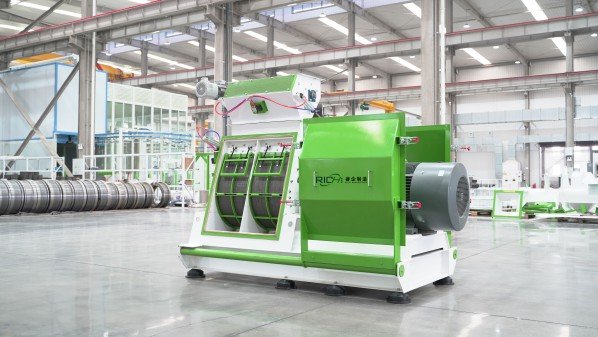
A preparation section may include sorting, shredding, crushing, and conveying. The objective is to create a more uniform feedstock that can be supplied continuously to the pellet mill.
Contaminants should also be removed. Plastics, metal pieces, stones, and unsuitable coated materials can affect both product quality and equipment operation.
Moisture Can Affect Pellet Formation
Moisture is another factor that should be evaluated before production.
Material that is excessively wet may require drying, while very dry material may behave differently during compression. The appropriate operating condition depends on the actual paper composition and equipment configuration.
For this reason, a raw-material test can be more useful than relying on general assumptions about paper waste.
How Does It Compare With Other Biomass Equipment?
Pelletizing technology is widely used for agricultural and forestry residues as well.
For example, vertical biomass pellet machine capacity may be evaluated for projects processing materials such as sawdust, straw, or other biomass residues. These materials have different physical properties from paper, so their preparation and pelletizing requirements can vary.
The comparison shows why equipment selection should be based on feedstock characteristics rather than capacity alone.
Designing the Supporting Equipment
A one-ton-per-hour pelletizing target also requires suitable auxiliary equipment.
Depending on the project, the production process may include raw-material storage, crushing, drying, conveying, pelletizing, cooling, screening, and packaging.
If the crusher cannot continuously supply enough prepared material, the pellet machine will not reach stable production. Likewise, insufficient cooling or screening capacity can create a bottleneck after pelletizing.
A balanced production line is therefore more important than maximizing the capacity of one individual machine.
What Should Buyers Ask Suppliers?
A technical inquiry should include the type of paper waste, approximate moisture, contamination level, available daily quantity, desired pellet diameter, operating hours, and final application.
These details help suppliers determine whether one-ton-per-hour equipment is appropriate or whether another capacity would provide better utilization.
It is also useful to consider future expansion. A company expecting its waste supply to increase may prefer a system that allows additional equipment to be integrated later.
When comparing a pellet mill machine for different applications, buyers should evaluate power consumption, maintenance requirements, material preparation, floor space, and expected operating conditions rather than focusing exclusively on purchase price.
For companies researching practical biomass processing solutions, useful resources can provide additional background on pelletizing technology and production-line design.
Ultimately, a one-ton-per-hour system can be a practical option when its capacity matches the available feedstock and operating schedule. Proper preparation, balanced auxiliary equipment, and suitable process conditions are the foundation of reliable pellet production.
Related post:https://pelletizerequipment.com/corn-stalk-pellet-machine/