



How Are Biomass Pellets Made for Renewable Energy?
As countries and industries look for practical ways to reduce dependence on fossil fuels, biomass energy has attracted growing attention. Agricultural residues, forestry by-products, and other forms of organic waste can be converted into compact fuel pellets that are easier to store, transport, and use.
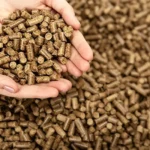
Unlike loose biomass materials, pellets have a relatively uniform size, shape, and moisture content. These characteristics make them suitable for automated feeding systems, industrial boilers, heating equipment, and certain combined heat and power applications.
But how exactly does loose biomass become a consistent solid fuel? What raw materials are suitable, what processing steps are required, and how should a pellet manufacturing project be planned?
This article explores these questions from a practical energy perspective and explains the basic principles behind a biofuel pellet production line, from raw material preparation to finished pellet handling.
What Raw Materials Can Be Used to Make Biofuel Pellets?
The choice of raw material is one of the most important factors in biomass pellet production. Common materials include sawdust, wood chips, bark, rice husks, wheat straw, corn stalks, peanut shells, sunflower husks, and other agricultural or forestry residues.
Wood residues are particularly suitable because they generally have good combustible characteristics and can produce relatively dense pellets. Sawdust from furniture factories, sawmills, and wood-processing plants is often used because its small particle size reduces the amount of mechanical processing required before pelletizing.
Agricultural residues can also provide an important source of biomass energy. Materials such as rice husks and straw are widely available in agricultural regions, although they may require additional processing because of their different fiber structures, ash content, and moisture characteristics.
The most suitable raw material therefore depends not only on availability but also on its moisture content, particle size, ash content, bulk density, and chemical composition.
Why Is Moisture Content So Important?
Moisture has a direct influence on pellet formation and fuel quality. If biomass contains too much water, it can be difficult to compress properly, and more energy may be required during drying.
On the other hand, material that is excessively dry may also affect pellet formation because a certain amount of moisture can help fibers bind together during compression.
For many biomass pellet applications, raw material moisture is commonly adjusted to an appropriate range before pelletizing. The exact target depends on the material, pellet mill design, and final product requirements rather than following one universal number.
This is why moisture testing should be part of the initial raw material assessment. Instead of selecting equipment first and adapting the raw material later, project developers can begin by understanding the actual characteristics of the available biomass.
Do Different Biomass Materials Require Different Processing?
Yes. There is no single processing formula that works equally well for every biomass material.
Sawdust may already have a relatively small particle size and can sometimes move directly into drying or pelletizing after basic screening. Larger wood chips, however, normally require size reduction before further processing.
Straw and stalks may need shredding or hammer milling to create a suitable particle structure. Agricultural husks can behave differently during compression because of their fiber and mineral content.
The production process should therefore be designed around the raw material rather than simply copying an existing plant configuration.
A practical biomass project normally begins with laboratory testing or small-scale trials. These tests can help determine moisture requirements, suitable particle size, pellet durability, bulk density, and the behavior of the material during compression.
Related Post: https://commercialpelletmill.com/efb-pellet-production-line/
What Equipment Is Needed for Pellet Production?
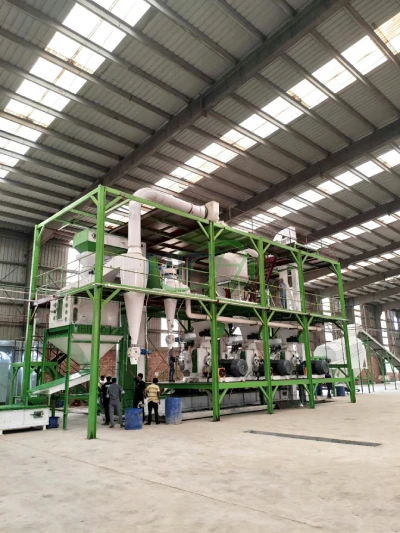
A commercial biomass pellet plant usually consists of several interconnected processing stages rather than a single machine.
A typical process may include:
Raw material receiving → cleaning → crushing → drying → fine grinding → conditioning → pelletizing → cooling → screening → packing or bulk storage
Not every project requires all of these stages. For example, relatively dry and finely sized sawdust may require less preparation than freshly collected agricultural residues.
The capacity of each machine also needs to be coordinated. If the dryer can process significantly less material than the pellet mill, it may become the production bottleneck. Similarly, insufficient cooling or screening capacity can affect downstream packaging and storage.
A properly balanced system is therefore more important than simply selecting individual machines with high nominal capacities.
How Does a Biomass Pellet Mill Work?
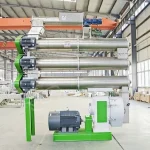
Pelletizing is the stage where prepared biomass is compressed into dense cylindrical particles.
Inside a pellet mill, biomass is fed into a compression chamber where rollers press the material through holes in a die. The combination of pressure, friction, heat, and natural binding characteristics causes the biomass particles to form compact pellets.
The diameter of the die holes determines the approximate pellet diameter. Common fuel pellet sizes include 6 mm and 8 mm, although other specifications are also possible depending on the intended application.
Pellet durability is influenced by several factors, including raw material properties, moisture, particle size, compression conditions, die specifications, and operating parameters.
This explains why pellet quality cannot be determined by the pellet mill alone. Upstream preparation and proper operating conditions are equally important.
Why Is Particle Size Important Before Pelletizing?
Particle size affects both compression and the final structure of the pellets.
Large particles can make it more difficult to achieve a uniform pellet structure. Extremely fine material, meanwhile, may increase grinding energy without necessarily producing proportional benefits.
The objective is generally to create a reasonably consistent particle size that allows the material to move through the pellet mill smoothly and form a stable product.
Hammer mills are commonly used when biomass requires additional size reduction. Screens can then help control the resulting particle distribution.
For plants handling multiple raw materials, particle-size requirements may need to be adjusted according to the characteristics of each feedstock.
What Happens During the Drying Process?
Drying removes excess moisture from biomass before pelletizing. This stage can have a significant impact on the overall energy balance of the plant.
Rotary dryers are widely used for larger biomass-processing applications because they can handle continuous material flow. Depending on the project, other drying technologies may also be considered.
The heat source is an important design factor. Some plants use biomass residues as part of the thermal energy supply, while others may use gas or other heat sources.
The key consideration is not simply how quickly the material can be dried, but how efficiently moisture can be removed while maintaining safe and stable operation.
Excessive drying can waste thermal energy, whereas insufficient drying may result in poor pellet formation and inconsistent fuel properties.
Can Biomass Waste Really Become a Useful Fuel?
Biomass residues are often treated as low-value by-products because they are generated in large quantities and can be difficult to handle in their original form.
Pelletizing changes their physical characteristics. Loose sawdust, straw, or agricultural residues have relatively low bulk density and can occupy considerable storage space. After compression, the material becomes much denser and easier to transport mechanically.
This does not mean that every biomass residue is automatically an economically viable fuel. Collection, transportation, drying, processing, and storage all consume resources.
The energy value of the final product should therefore be considered together with the energy and costs required to manufacture it.
A successful biomass fuel project is ultimately based on the relationship between feedstock availability, processing requirements, local energy demand, logistics, and operating costs.
Is a Dedicated Production Line Necessary for Every Project?
Not necessarily.
Small operations may use individual machines for crushing, drying, and pelletizing. This approach can be suitable when production capacity is limited or when the operator wants a relatively simple processing arrangement.
Larger commercial facilities normally benefit from an integrated system because automated conveying, dosing, temperature monitoring, dust collection, cooling, screening, and packaging can improve process consistency.
The right scale depends on the available raw material and the intended market.
For example, a small sawmill producing a few tons of sawdust per day may have different requirements from a biomass fuel producer collecting residues from several agricultural areas.
This is why production capacity should be calculated from actual feedstock availability rather than selected only according to the desired output.
How Large Should a Biomass Pellet Plant Be?
Capacity planning is one of the first questions that should be addressed during project development.
A plant designed for 1 ton per hour has very different equipment requirements from a facility designed for 5, 10, or 20 tons per hour. Larger systems generally require more powerful conveying, drying, grinding, pelletizing, cooling, storage, and dust-control equipment.
However, higher capacity does not automatically mean better project economics.
If sufficient biomass is not available locally, an oversized plant may operate below its designed capacity. This can increase equipment utilization costs and complicate raw material logistics.
A sensible approach is to estimate the sustainable annual supply of biomass first, then determine how many operating hours are realistically available each year.
For example, if a project depends heavily on seasonal agricultural residues, storage capacity may become just as important as pellet mill capacity.
What Should Be Considered When Building a Pellet Plant?
A biomass pellet facility involves much more than purchasing pellet-making equipment.
The site should provide adequate space for raw material storage, production equipment, finished-product storage, vehicle access, electrical systems, ventilation, and dust-control infrastructure.
Raw material transportation is another important consideration. Biomass has a relatively low bulk density before processing, so transporting it over long distances can significantly affect the overall energy and economic balance.
Local regulations should also be considered, particularly those relating to dust emissions, fire prevention, noise, wastewater, electrical safety, and industrial construction.
In addition, the plant layout should provide enough space for maintenance and equipment replacement. A compact layout may save construction space initially but can make future maintenance more difficult.
How Does a Pellet Production Line Improve Biomass Handling?
One of the main advantages of pelletization is improved physical handling.
Loose biomass can be irregular in shape and difficult to feed automatically. Pellets, by contrast, are relatively uniform and can be moved using conveyors, bucket elevators, screw feeders, and other automated systems.
This makes pellet fuel suitable for applications where consistent feeding is required.
Pellets are also easier to package into bags or store in bulk. Their higher bulk density can reduce the storage volume required per unit of energy compared with untreated loose biomass, although actual storage requirements depend on pellet density and fuel characteristics.
For industrial users, these logistical advantages can be just as important as the fuel itself.
How Important Is Cooling After Pelletizing?
Fresh pellets can leave the pellet mill at elevated temperatures and may still contain residual moisture.
Cooling allows the pellets to stabilize before screening, packing, or storage. A counterflow cooler is commonly used in larger pellet facilities because it can reduce pellet temperature while helping remove excess moisture.
Without adequate cooling, hot pellets may be more vulnerable to deformation, breakage, or condensation problems during storage.
After cooling, the pellets can pass through a screening system that separates fines and broken particles from the finished product.
Recovered fines can often be returned to the production process, helping reduce material losses.
What Role Does Dust Collection Play?
Biomass processing can generate dust during crushing, grinding, conveying, and pellet handling.
Dust-control equipment is therefore an important part of industrial biomass plant design. Bag filters, cyclones, ducting systems, and localized extraction points can be used depending on the process configuration.
Good housekeeping is equally important. Dust should not be allowed to accumulate around equipment, electrical systems, or structural surfaces.
Fire and explosion prevention should also be addressed during plant design. The exact requirements depend on local regulations and the properties of the processed biomass.
These safety considerations should be incorporated into the engineering stage rather than added only after the production line has been installed.
How Can Pellet Production Become More Energy Efficient?
Energy efficiency is particularly important because biomass pellet production itself requires electricity and thermal energy.
The largest energy-consuming stages may include drying, grinding, pelletizing, conveying, and auxiliary systems.
Drying efficiency can be improved through appropriate heat recovery, insulation, airflow management, and control of feedstock moisture.
Grinding energy can be reduced by avoiding unnecessary over-processing. Similarly, properly maintaining pellet mills and selecting suitable dies can help maintain stable operating conditions.
Automation can also contribute to energy management by adjusting feeding rates and equipment operation according to actual production conditions.
Rather than focusing on one machine, energy efficiency should be evaluated across the entire production system.
What Makes a Biomass Pellet Project Sustainable?
Sustainability involves more than using a renewable raw material.
The origin of the biomass, transportation distance, processing energy, land-use considerations, emissions, and end-use efficiency all influence the overall environmental profile of the fuel.
Residues and by-products can offer an attractive feedstock because they make use of materials that might otherwise have limited value. However, biomass resources are not unlimited, and responsible sourcing remains important.
A well-designed pellet project should therefore consider the entire supply chain—from where the raw material originates to where the finished fuel is consumed.
This broader perspective helps prevent the assumption that every pellet produced from organic material has the same environmental benefits.
What Should Buyers Ask Equipment Manufacturers?
Before selecting equipment, project developers can prepare a detailed list of technical questions.
These may include:
- What raw materials can the equipment process?
- What moisture range is required?
- What particle size is recommended?
- What is the actual production capacity under the proposed raw material conditions?
- How much electrical power is required?
- What type of dryer is appropriate?
- How will dust be collected?
- What pellet diameter is required?
- How are pellets cooled and screened?
- What spare parts should be kept on site?
- What maintenance procedures are required?
- How will the production line be expanded in the future?
These questions help move the discussion away from equipment specifications alone and toward the complete production process.
How Does RICHI Manufacture Biomass Pellet Equipment?
When researching equipment suppliers, it is useful to examine not only individual machines but also their experience with complete biomass-processing systems.
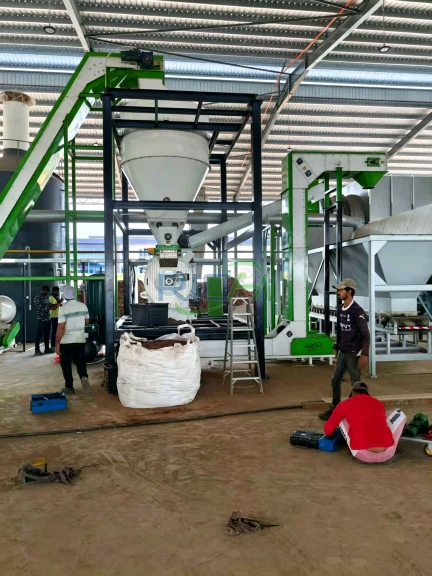
RICHI Manufacture is associated with equipment and engineering solutions for biomass pellet processing, including systems designed around different raw materials and production capacities.
For a project developer, the more important question is how individual machines work together. A pellet mill may have a suitable nominal capacity, but the complete system also needs appropriate drying, grinding, conveying, cooling, screening, and material-handling capacity.
Technical communication should therefore focus on the specific feedstock, target output, pellet specifications, site conditions, and operating schedule.
Can Biomass Pellets Support the Transition to Renewable Energy?
Biomass pellets are not a universal replacement for every fossil fuel application, but they can play a role in renewable and low-carbon energy systems when feedstocks are responsibly sourced and production is appropriately managed.
Their value comes partly from converting dispersed organic residues into a standardized fuel that can be stored, transported, and used efficiently.
In regions with strong forestry or agricultural industries, pellet production can also provide a pathway for utilizing local by-products.
The future role of biomass energy will depend on factors such as resource availability, environmental regulations, competing uses for biomass, technological development, and the economics of alternative renewable energy sources.
What Is the Basic Process from Biomass Waste to Fuel Pellets?
Although production lines vary considerably, the overall concept can be summarized in several stages:
1. Feedstock collection
Biomass residues are collected from forestry, agriculture, or wood-processing operations.
2. Cleaning and preparation
Foreign materials and unsuitable particles are removed.
3. Size reduction
Large pieces are crushed or milled into a more suitable particle size.
4. Drying
Excess moisture is removed to create appropriate pelletizing conditions.
5. Fine grinding
The material is processed further when necessary.
6. Pelletizing
Prepared biomass is compressed into cylindrical fuel pellets.
7. Cooling
Fresh pellets are cooled and stabilized.
8. Screening
Fines and broken pellets are separated from the finished product.
9. Storage or packaging
The final fuel is stored in bags, silos, warehouses, or bulk systems.
This sequence provides a useful framework for understanding how a biofuel pellet production line transforms relatively low-density biomass residues into a standardized solid fuel.
Final Thoughts: Where Does Biomass Pellet Production Fit in the Energy Sector?
The growing interest in biomass pellets reflects a broader search for practical renewable energy solutions that can complement solar, wind, hydropower, and other energy technologies.
The fundamental idea is relatively simple: take suitable organic residues, prepare them properly, compress them into a stable fuel, and deliver that fuel to an appropriate energy application.
The engineering challenge lies in making every stage work efficiently together.
Raw material quality, moisture control, drying efficiency, particle size, pelletizing conditions, cooling, dust management, storage, and transportation all influence the final result.
For anyone considering a pellet project, the most useful starting point is not a particular machine model but a clear understanding of the available biomass, expected production volume, target fuel specifications, local energy demand, and site conditions.
Once these factors are established, the production process and equipment configuration can be developed around real operating requirements. In this way, biomass pelletization becomes more than a method of producing fuel—it becomes a practical approach to converting locally available organic resources into a manageable form of renewable energy.