



The journey from a harvested field to a finished biomass pellet is longer than many people realize.
A stalk lying in a field is not immediately suitable for a pellet mill.
It may contain excessive moisture.
Its fibers may be too long.
The material may contain soil or other contaminants.
Its bulk density may be extremely low.
Before pelletizing, the biomass must be transformed into a more consistent material.
This preparation process is what makes agricultural residue pellet production technically interesting.
Stage One: Collection
The production process begins outside the factory.
Farm residues need to be collected efficiently.
Collection methods vary according to crop type and local farming practices.
Some residues are baled.
Others are chopped during harvesting.
Some are collected manually.
The collection method influences the material condition when it arrives at the factory.
Stage Two: Receiving and Inspection
Once the biomass reaches the plant, it should be inspected.
Operators may check:
- Moisture.
- Foreign materials.
- Particle size.
- Fiber length.
- Bulk density.
This simple inspection can prevent unsuitable material from entering the production process.
A factory processing multiple feedstocks may also need separate storage areas.
Stage Three: Size Reduction
Agricultural residues are generally too large for direct pelletizing.
Corn stalks and wheat straw may contain long fibers.
Rice straw may arrive in bulky bundles.
A chopping system reduces the material into manageable pieces.
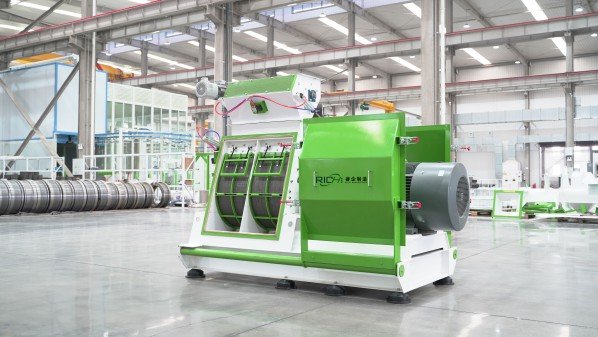
A hammer mill or other crusher can then further reduce the particle size.
The objective is not to make the material as fine as possible.
It is to make it suitable for stable pellet formation.
Why Corn Stalks Are Interesting
Corn stalks are widely available in agricultural areas.
They can be converted into biomass fuel after proper preparation.
A corn stalk pellet machine can compress the prepared material into dense pellets.
But the machine is only one stage.
Its performance depends heavily on what enters the pelletizing chamber.
If the material is too wet, too coarse, or poorly prepared, production can become unstable.
Stage Four: Drying
If moisture is too high, the material needs to be dried.
A dryer reduces moisture to a more suitable level for pelletizing.
Industrial dryers often use heated air to transfer energy to the biomass.
The system must be carefully controlled because excessive drying wastes energy.
The ideal process removes enough water to improve pelletizing while avoiding unnecessary heat consumption.
Stage Five: Material Conveying
Once the material is prepared, it needs to move between machines.
Conveying equipment may seem simple, but it plays a major role in plant reliability.
Blockages can stop the entire production line.
Uneven feeding can reduce pellet mill efficiency.
Therefore, conveyors and feeders should be selected according to material characteristics.
Stage Six: Pelletizing
Now the biomass reaches the core production stage.
The prepared material enters the pellet mill.
Pressure and friction compress the biomass through openings in a die.
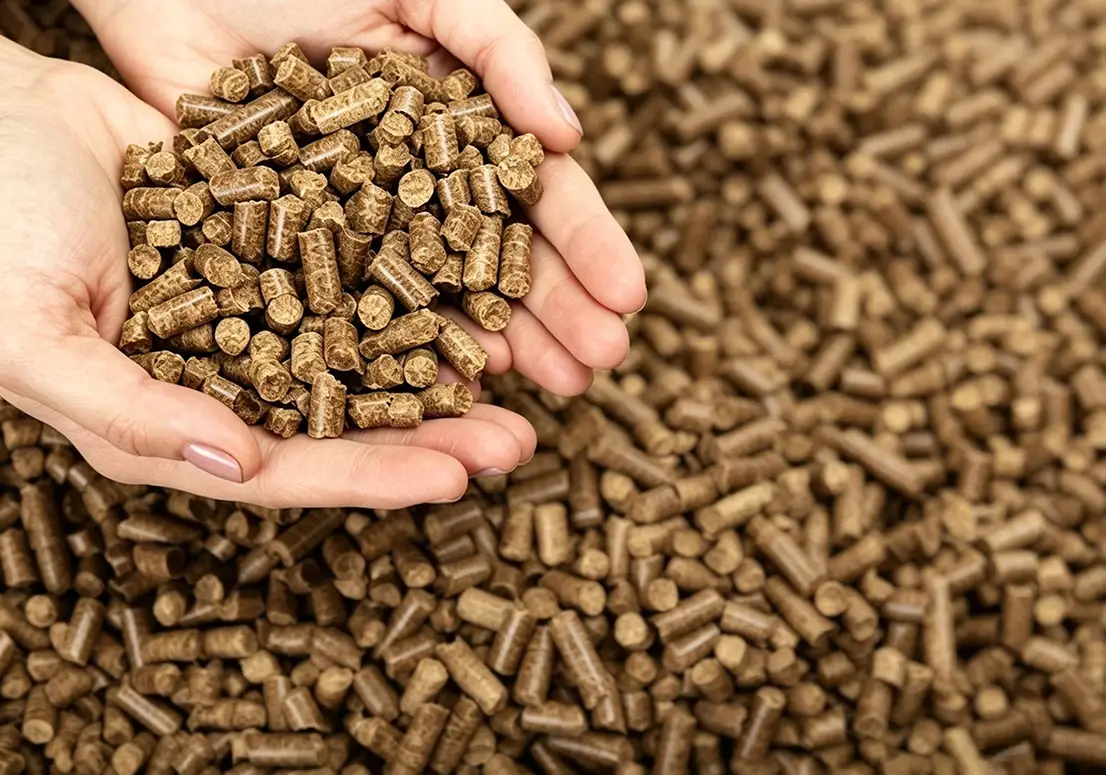
The material exits as cylindrical pellets.
A cutting system determines the approximate pellet length.
The final pellet characteristics depend on material properties and machine settings.
Wheat Straw and Rice Straw Require Different Approaches
Wheat straw may require careful fiber reduction.
Rice straw may require more attention to ash and mineral content.
Corn stalks can vary depending on harvesting and storage.
This is why a single production recipe should not automatically be applied to every agricultural residue.
Testing and process adjustment can improve results.
Choosing the Right Capacity
Capacity should be determined by raw material availability and market demand.
For a small agricultural cooperative, a moderate-capacity machine may be sufficient.
For a larger biomass fuel company, a higher-capacity system may be justified.
A 0.5-8 T/H wheat straw pellet machine for sale can be considered across a broad range of applications, but the actual configuration should be matched to the specific project.
The advertised capacity range should not replace a detailed material assessment.
Stage Seven: Cooling
Pellets leave the pellet mill with elevated temperature.
They need to be cooled before storage.
Cooling removes excess heat and helps stabilize the pellets.
Without adequate cooling, condensation may occur after packaging.
This can affect storage stability.
Stage Eight: Screening
Screening removes fines and broken pellets.
This creates a more uniform product.
The fines can often be returned to the production line.
Screening therefore helps improve product recovery.
Stage Nine: Packaging
The final product can be sold in bags or bulk.
Bagged pellets are suitable for smaller customers.
Bulk delivery can be more efficient for large industrial users.
The choice affects the required packaging and storage systems.
What Makes a Pellet Attractive to Customers?
Customers typically want a fuel that is:
- Consistent.
- Easy to handle.
- Easy to store.
- Suitable for their boiler or heating system.
- Competitive in cost.
Pellet appearance also matters in some markets.
However, appearance alone does not determine fuel quality.
Moisture, density, durability, ash, and heating value are generally more important technical indicators.
Why Storage Should Be Designed Early
Pellet storage requires protection from moisture.
Biomass pellets can absorb water from humid environments.
A storage facility should therefore be dry and well managed.
Large-scale plants may require silos or warehouses.
Smaller producers may use bagged storage.
The storage solution should match the production volume and sales model.
Could a Factory Handle Multiple Straw Types?
Yes, but flexibility requires planning.
A plant may process corn stalks during one season and wheat straw during another.
This can increase annual equipment utilization.
However, switching feedstocks may require changes in:
- Grinding.
- Drying.
- Feeding.
- Die selection.
- Pelletizing parameters.
The plant should therefore be designed with material flexibility in mind.
When a Complete Solution Makes Sense
A business processing multiple agricultural residues may benefit from an integrated system.
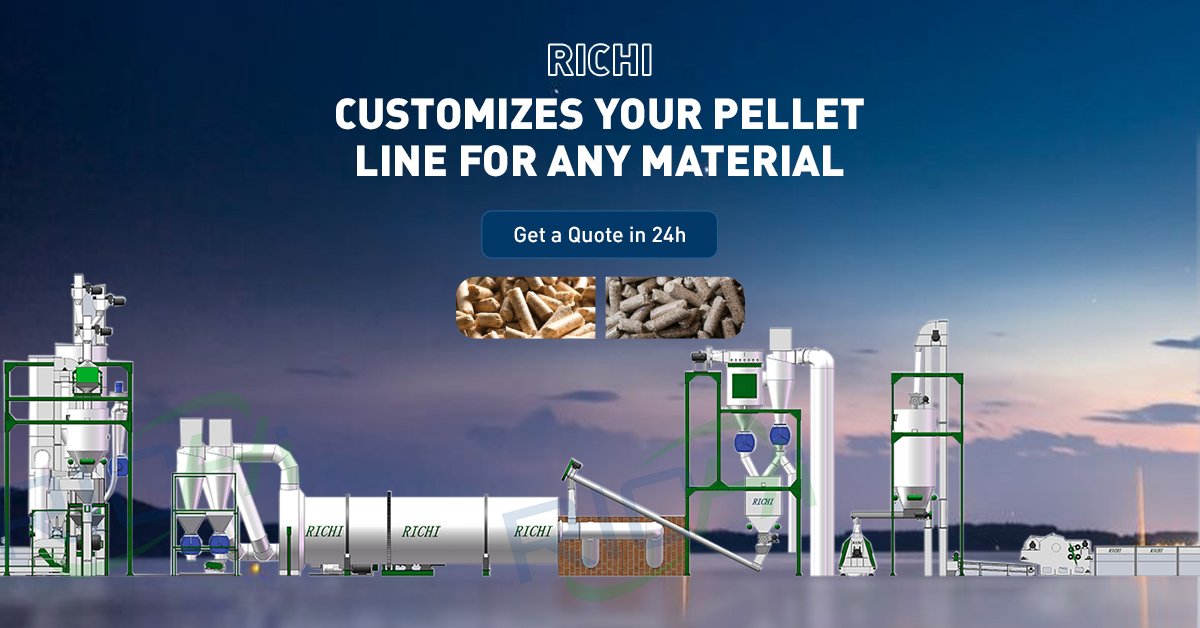
A complete system can coordinate material preparation, drying, pelletizing, cooling, screening, and packaging.
For larger projects, a pelleting machine is only one component of a broader production line.
The system should be engineered around the actual raw material flow.
What About Future Expansion?
A factory may start with a small production capacity and expand later.
Good plant design can make expansion easier.
For example, the workshop can reserve space for an additional pellet mill.
Electrical systems can be designed with future capacity in mind.
Storage can be expanded.
Conveying systems can be configured for additional equipment.
This approach avoids rebuilding the entire factory when demand increases.
Technology and Practical Experience
Biomass pellet production combines engineering with practical operating experience.
The same machine may produce different results under different raw material conditions.
Operators learn to recognize changes in moisture, material flow, pellet appearance, and equipment load.
This operational knowledge becomes increasingly valuable as production scales up.
A technology supplier such as pellet maker manufacturers can provide equipment, but successful operation ultimately depends on the entire process.
Learning From Real Projects
Before investing, it can be useful to study projects using similar raw materials.
Look at their production capacity.
Examine their drying systems.
Compare their material handling methods.
Study their pellet applications.
Understand how they manage seasonal raw material supply.
Industry case studies can reveal practical issues that are not obvious from equipment brochures.
For further research, blog here content can provide another starting point for exploring biomass processing topics.
(Related Post: https://biomasspelletizer.com/straw-pellet-production-line/)
Final Thoughts
Agricultural residues have enormous potential, but converting them into valuable pellets requires more than mechanical compression.
The process begins with collection and continues through inspection, chopping, crushing, drying, conveying, pelletizing, cooling, screening, packaging, and storage.
Each stage contributes to the final product.
For businesses considering corn stalk, wheat straw, or rice straw pellet production, the most important step is to connect the raw material with the intended market.
Once that connection is clear, equipment capacity and production line configuration can be selected more intelligently.
The result is not simply a pile of compressed straw.
It is a standardized biomass fuel product that can be stored, transported, traded, and used as part of a broader renewable energy system.