

The palm oil industry generates large quantities of biomass residues during the processing of fresh fruit bunches. Among these residues, empty fruit bunches, commonly known as EFB, are one of the most significant. For palm oil mills, managing large volumes of EFB can become a major operational challenge because the material is bulky, wet, fibrous, and difficult to transport in its original form.
EFB pelletizing provides a practical way to convert this low-density palm residue into compact biomass pellets. Instead of treating EFB only as a waste material, palm oil mills can process it into a standardized solid biomass fuel that is easier to store, transport, handle, and utilize.
The benefits of EFB pelletizing extend beyond fuel production. By reducing the physical volume of palm waste and improving its usability, pelletizing can contribute to better biomass resource utilization and more organized waste management at palm oil processing facilities.
This article explains how EFB pelletizing reduces palm waste, how the process works, what equipment is required, and which factors should be considered when evaluating an EFB pelletizing project.
What Is EFB?
EFB stands for empty fruit bunches. It is the fibrous material left after palm fruits are removed from fresh fruit bunches during palm oil processing.
A palm oil mill can generate substantial quantities of EFB as part of its normal operation. Because EFB is produced continuously, mills need an effective method for handling and utilizing it.
Raw EFB has several characteristics that make direct handling difficult:
- High moisture content
- Long and tangled fibers
- Low bulk density
- Irregular particle size
- Large physical volume
- Difficult long-distance transportation
- Potential contamination with soil or other foreign materials
These characteristics mean that simply accumulating EFB in open areas is not always an efficient long-term management strategy.
Pelletizing changes the physical form of EFB and makes it more suitable for use as a biomass fuel or industrial energy feedstock.
Why Is EFB Considered a Palm Waste Management Challenge?
The first challenge is volume.
EFB is bulky compared with the amount of useful solid material contained in the same volume of compressed biomass pellets. This means that transportation and storage can require considerable space.
The second challenge is moisture.
Fresh EFB may contain a high level of moisture. Wet biomass is heavier to transport and generally requires drying before efficient pellet production.
The third challenge is its fibrous structure.
Long EFB fibers can create problems during feeding, shredding, crushing, and pelletizing. Specialized preparation equipment is therefore often required.
The fourth challenge is storage.
If EFB is exposed to rain or uncontrolled moisture, its condition can change over time. Proper storage and timely processing are therefore important for stable production.
These challenges explain why a complete processing system is often more effective than simply moving EFB from one storage area to another.
How EFB Pelletizing Reduces Palm Waste
EFB pelletizing reduces palm waste mainly by changing a bulky residue into a compact and standardized product.
The process does not make the material disappear. Instead, it improves how the material can be handled and utilized.
A typical EFB pelletizing process includes:
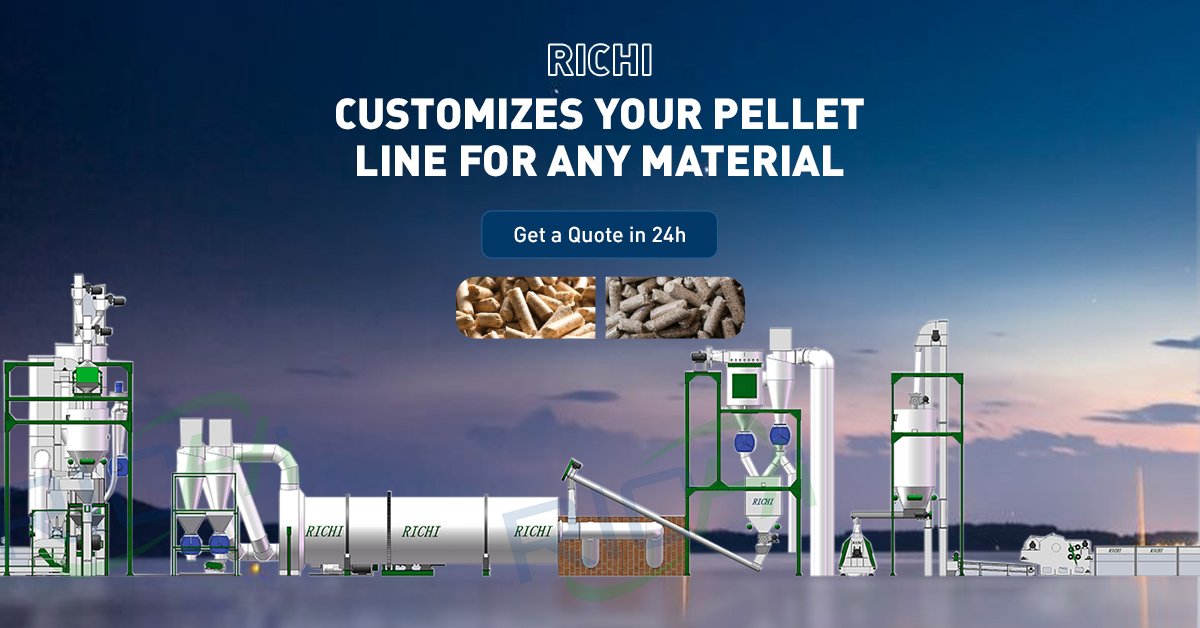
EFB Collection → Cleaning → Shredding → Drying → Crushing → Fine Grinding → Pelletizing → Cooling → Screening → Packaging
Each stage contributes to more efficient EFB utilization.
1. It Converts EFB Into a Useful Product
The most direct benefit of pelletizing is that EFB can become a usable biomass fuel.
Instead of treating empty fruit bunches purely as a disposal problem, a palm oil mill can process them into pellets for applications such as:
- Biomass boilers
- Industrial heating
- Thermal energy production
- Biomass fuel markets
- On-site energy utilization
The exact application depends on pellet specifications, local fuel demand, boiler requirements, and applicable regulations.
This creates a pathway from palm processing residue to a standardized biomass product.
2. Pelletizing Reduces Bulk Volume
One of the most important physical advantages of pelletizing is densification.
Loose EFB occupies a large amount of space because the fibers are irregular and contain significant air gaps. During pelletizing, prepared EFB is compressed through a die under high pressure.
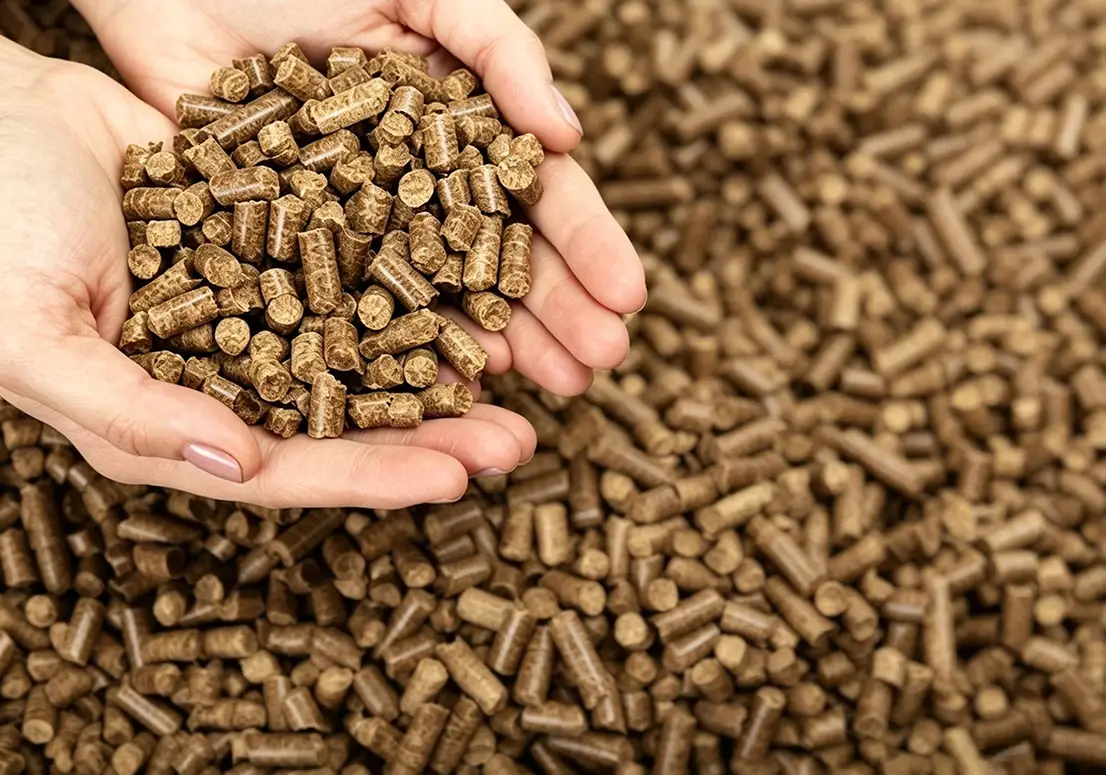
The result is a much denser cylindrical pellet.
Higher bulk density can make the material easier to:
- Store
- Load
- Transport
- Handle
- Feed into combustion equipment
For palm oil mills dealing with large amounts of EFB every day, improving material density can significantly simplify logistics.
Instead of handling loose, tangled fibers, the mill can handle a standardized pellet product.
3. It Makes Transportation More Efficient
Transporting loose EFB can be inefficient because trucks may reach their volume limit before reaching their maximum weight capacity.
Pelletizing changes this situation by producing a denser material.
The benefits can include:
- More compact transportation
- Easier loading and unloading
- Better use of storage space
- More standardized handling
- Reduced difficulty in long-distance transportation
This is particularly relevant when the final biomass fuel customer is located away from the palm oil mill.
The economics of transportation should be evaluated together with drying, pelletizing, packaging, and other operating costs.
4. It Improves Storage and Handling
Loose EFB can be difficult to organize in a warehouse because long fibers can become tangled and occupy large areas.
Pellets have a much more uniform shape and size.
This allows them to be handled using:
- Conveyors
- Silos
- Bulk loading systems
- Bagging machines
- Forklifts
- Bulk transport vehicles
A standardized pellet product can therefore make the overall biomass logistics system more organized.
However, finished pellets should still be protected from excessive moisture because biomass pellets can absorb water and lose their physical integrity.
5. It Creates a More Consistent Biomass Fuel
Raw EFB has irregular dimensions and moisture distribution.
Pelletizing introduces a series of processing steps that can improve material consistency.
During preparation:
- Large fibers are reduced.
- Moisture is controlled.
- Particle size is made more uniform.
- Foreign materials can be removed.
- The material is compressed into a standard shape.
The result is a more consistent biomass fuel compared with loose EFB.
This can make automated feeding into certain biomass combustion systems easier.
6. It Improves Palm Biomass Utilization
Palm oil production produces more than just the primary oil product.
Several biomass residues can be generated during palm processing, including empty fruit bunches, fibers, and shells.
EFB pelletizing provides one potential route for improving the utilization of this biomass stream.
Instead of allowing EFB to accumulate without a defined end use, a palm oil mill can integrate pellet production into its broader biomass utilization strategy.
Depending on the plant configuration, EFB pellets may be consumed internally or sold to external users.
The EFB Pelletizing Process
A successful EFB pelletizing system generally requires several preparation stages.
EFB Receiving
Raw EFB is collected and delivered to a receiving area.
A hopper or storage bunker can provide temporary buffering between the palm oil processing operation and pellet production line.
Cleaning
Foreign materials such as stones, soil, plastics, and metal should be removed where necessary.
Cleaning protects downstream machinery and improves the quality of prepared biomass.
Shredding
A shredder cuts long EFB fibers and breaks large pieces into smaller material.
This stage is especially important because long fibers can interfere with stable material feeding.
Drying
The moisture content of EFB is reduced using a suitable drying system, commonly an industrial rotary dryer machine in industrial applications.
Moisture control is essential because excessively wet material is difficult to pelletize efficiently.
Crushing and Grinding
After drying, EFB can be processed through a crusher or hammer mill.
The objective is to achieve a particle size suitable for stable pellet formation.
Pelletizing
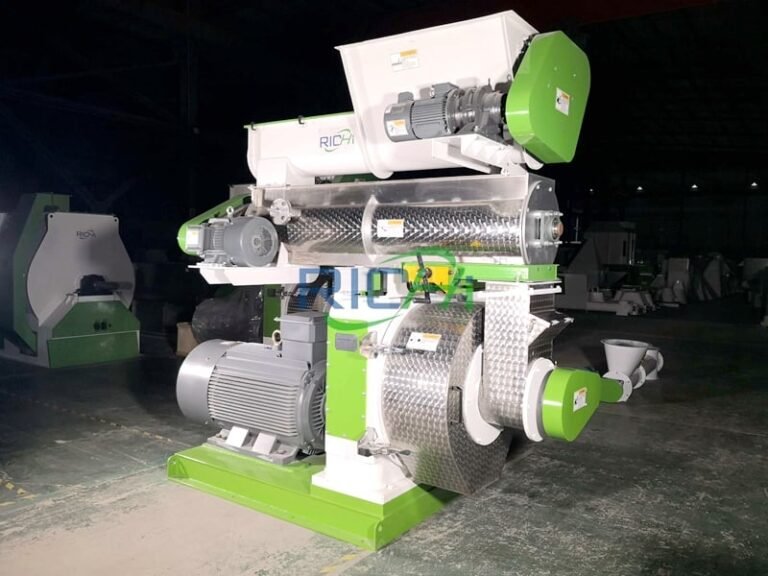
Prepared EFB enters the pellet mill.
The rollers compress the biomass through die holes to form cylindrical pellets.
(Learn more: https://richipelletizer.com/efb-pellet-machine/)
Cooling
Fresh pellets are hot after compression.
A pellet cooler reduces their temperature and helps stabilize their structure before screening and packaging.
Screening
The finished pellets pass through a vibrating screen.
Fine particles and broken pellets can be separated and potentially returned to the pelletizing process.
Packaging
The final pellets can be packed into bags or loaded in bulk according to customer requirements.
What Equipment Is Needed for EFB Pelletizing?
A complete EFB pelletizing line can include the following equipment:
EFB Shredder
Used to reduce long fibers and large EFB pieces.
Rotary Dryer
Used to reduce moisture to a suitable level for pelletizing.
Hammer Mill
Used to reduce particle size and improve material uniformity.
Magnetic Separator
Used to remove ferrous metal contaminants and protect downstream equipment.
Feeding System
Provides stable material flow to the pellet mill.
EFB Pellet Mill
The core machine responsible for compressing prepared EFB into pellets.
Pellet Cooler
Reduces pellet temperature and improves product stability.
Vibrating Screen
Separates qualified pellets from fines and broken material.
Packing Machine
Weighs and packages finished pellets.
Dust Collection System
Controls dust generated during shredding, grinding, screening, and conveying.
Conveyors
Transport EFB and finished pellets between different processing stages.
The exact equipment configuration should be customized according to raw material characteristics and production capacity.
What Is the Role of an EFB Pellet Machine?
The pellet machine is the core piece of equipment in the system.
After EFB has been properly prepared, the material enters the pelletizing chamber. Rollers compress the biomass against the die, forcing it through the die holes.
The diameter of the holes determines the basic pellet diameter, while the compression conditions influence pellet density and formation.
For commercial production, a ring die pellet mill may be used for continuous high-capacity operation.
The machine should be selected according to:
- Production capacity
- EFB moisture
- Particle size
- Fiber characteristics
- Pellet diameter
- Die compression ratio
- Operating hours
- Automation requirements
Selecting the pellet mill without considering upstream drying and grinding capacity can create production bottlenecks.
What Affects EFB Pellet Machine Price?
When researching EFB pellet machine price, buyers should look beyond the basic purchase price of the pellet mill.
Several factors can affect equipment cost.
Production Capacity
A higher-capacity pellet machine generally requires a larger drive system and heavier-duty components.
Die and Roller Configuration
Different pellet specifications may require different die configurations and compression ratios.
Automation Level
Manual, semi-automatic, and fully automated systems can have significantly different investment requirements.
Motor Power
The required motor size depends on production capacity and material characteristics.
Material Preparation Requirements
If the raw EFB has high moisture and long fibers, additional shredding, drying, and grinding equipment may be necessary.
Cooling and Screening
A complete production line requires downstream equipment to handle the output of the pellet mill.
Packaging System
Automatic weighing and packing equipment can increase the initial investment but may reduce manual labor.
Dust Collection
Large industrial plants may require more comprehensive dust collection systems.
Therefore, comparing only the quoted pellet mill price can provide an incomplete picture of the total project investment.
Is EFB Pelletizing Economically Practical?
The economic feasibility of EFB pelletizing depends on the specific project.
Important factors include:
- Raw EFB availability
- Raw material moisture
- Required production capacity
- Electricity cost
- Thermal energy cost
- Labor cost
- Equipment investment
- Maintenance cost
- Pellet selling price
- Transportation distance
- Local biomass fuel demand
A palm oil mill with a continuous supply of EFB has an advantage in terms of raw material availability.
However, the project should still be evaluated based on actual operating conditions.
For example, a plant located close to a biomass fuel customer may have different economics from a plant that needs to transport pellets over a long distance.
(click to investigate: RICHI Pelletizer)
How EFB Pelletizing Can Reduce Waste Storage Pressure
Storage space is a major consideration for palm oil mills.
Loose EFB can occupy significant areas because of its low bulk density.
Pelletizing reduces the volume required for storing the processed material and creates a more manageable product.
A properly designed system can therefore help:
- Reduce loose biomass accumulation
- Improve material organization
- Increase storage efficiency
- Simplify material handling
- Reduce dependence on large open storage areas
This can be particularly valuable for mills operating continuously throughout the year.
How EFB Pelletizing Supports Circular Biomass Utilization
EFB pelletizing can be viewed as part of a broader circular utilization strategy.
The palm fruit is processed to produce palm oil, while the remaining biomass can be processed into additional useful products or energy resources.
In this model, EFB becomes a feedstock rather than simply a disposal material.
The basic concept is:
Palm Oil Processing → EFB Generation → Biomass Preparation → Pelletizing → Biomass Fuel → Energy Utilization
This approach can improve the overall utilization of resources within the palm oil industry.
The specific environmental and economic benefits depend on how the pellets are produced, transported, and ultimately used.
Factors That Affect EFB Pellet Quality
Reducing waste through pelletizing is only effective if the resulting pellets have suitable physical characteristics.
Several factors influence pellet quality.
Moisture
The material should have a suitable moisture level before entering the pellet mill.
Particle Size
Consistent particle size can support stable compression.
Fiber Length
Excessively long fibers can cause feeding problems.
Die Compression Ratio
The die should match the characteristics of EFB and the desired pellet specifications.
Roller Condition
Worn rollers can affect compression stability.
Cooling
Insufficient cooling can result in unstable pellets after production.
Screening
Effective screening helps remove excessive fines from the finished product.
Quality control should therefore be applied throughout the entire production process.
How to Reduce Energy Consumption During EFB Pelletizing
Energy efficiency is another important consideration.
Drying is often one of the most energy-intensive stages because significant thermal energy may be required to remove moisture from EFB.
Several approaches can help improve overall efficiency:
- Avoid excessive drying.
- Use appropriate dryer capacity.
- Recover and utilize available heat where practical.
- Maintain the dryer regularly.
- Match grinding capacity with pellet mill capacity.
- Avoid unnecessary fine grinding.
- Keep pellet mill components properly adjusted.
- Prevent unstable feeding.
- Maintain motors and transmission systems.
- Monitor electricity consumption by processing stage.
The objective should be to achieve the required pellet quality without using more energy than necessary.
EFB Pelletizing vs. Using Loose EFB
Loose EFB and EFB pellets have different characteristics.
Loose EFB is bulky and difficult to handle, while pellets are compact and standardized.
Pelletizing can provide advantages in:
- Bulk density
- Transportation
- Storage
- Automated feeding
- Product standardization
- Commercial handling
However, pelletizing also requires additional investment and energy.
Therefore, a mill should compare the complete economics of both options based on its actual circumstances.
If the EFB is consumed directly in an on-site biomass boiler, pelletizing may not always be necessary. If the material needs to be transported or sold as a standardized fuel, pelletizing may provide greater logistical value.
How to Plan an EFB Pelletizing Project
Before purchasing equipment, a palm oil mill should collect detailed information about the raw material.
Important project data includes:
- Daily EFB production
- Annual EFB availability
- Initial moisture
- Fiber characteristics
- Foreign material content
- Desired pellet diameter
- Target production capacity
- Final application
- Available energy sources
- Available factory space
- Local transportation conditions
- Packaging requirements
This information allows the production line to be designed according to actual conditions.
A complete engineering approach is generally more reliable than selecting individual machines independently.
Why Complete EFB Pelletizing Solutions Matter
The performance of an EFB pellet plant depends on how well the machines work together.
For example, a high-capacity pellet mill cannot achieve its rated output if the dryer cannot supply enough properly conditioned material.
Similarly, a powerful grinder does not solve the problem if the feeding system cannot deliver material consistently.
A complete EFB pelletizing solution coordinates:
Raw Material → Pretreatment → Drying → Grinding → Pelletizing → Cooling → Screening → Packaging
The capacity of each section should be balanced.
This helps reduce bottlenecks and allows the plant to operate more consistently.
Conclusion
EFB pelletizing provides a practical way to reduce the challenges associated with large quantities of palm oil processing waste.
By converting bulky empty fruit bunches into compact biomass pellets, pelletizing can improve storage efficiency, transportation, handling, material consistency, and biomass utilization.
The process typically requires several stages, including shredding, drying, crushing, grinding, pelletizing, cooling, screening, and packaging. The EFB pellet machine is the core equipment, but its performance depends heavily on proper raw material preparation and balanced upstream and downstream equipment.
When evaluating an EFB project, buyers should not focus only on EFB pellet machine price. The total investment should also consider drying equipment, shredders, grinders, conveyors, cooling systems, screening, dust collection, packaging, electrical controls, installation, maintenance, and operating costs.
For palm oil mills with a continuous supply of empty fruit bunches, a properly designed EFB pelletizing line can turn a bulky processing residue into a standardized biomass fuel. In this way, pelletizing can help reduce palm waste while creating a more manageable and potentially valuable biomass resource.