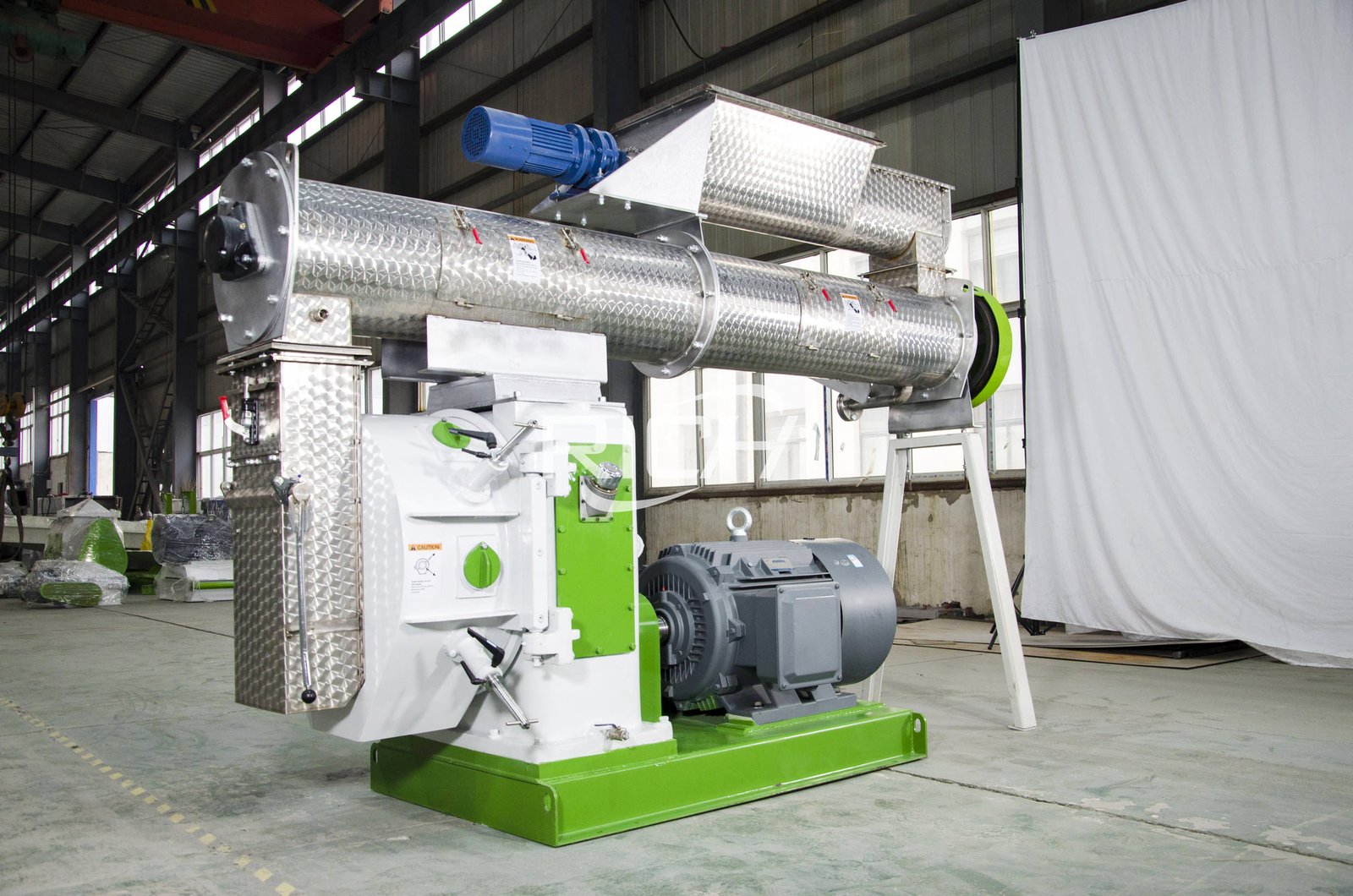





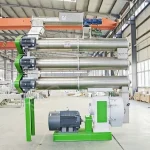

A cattle feed processing plant is not ready for production simply because its grinder, mixer and pellet mill have been installed. Cattle rations often combine grains, protein meals, minerals, molasses and forage materials whose moisture and physical form differ substantially. If the project includes wet or baled forage, the preparation route can be as important as the pelletizing section. Start-up therefore depends on coordinating material reception, drying where required, grinding, batching, mixing, pelleting, cooling and packing as one operating system.
RICHI’s cattle feed plant solution is presented for projects from 1 to 60 t/h and can produce mash, pellets, premixes and crumbles, with pellet diameters listed from 2 to 12 mm. The product page describes cleaning, crushing, mixing, pelletizing, cooling, screening and packaging, while noting that process configurations are customized to the feed formula and capacity. A project team should translate that broad scope into specific material routes, utility interfaces and acceptance conditions before construction is completed.
Map Every Ingredient to Its Required Preparation Route
A cattle ration may contain corn, wheat, cassava, bran, oilseed meals, minerals, premixes, salt, molasses and forage. These ingredients do not all pass through the same preparation equipment. Grains may require grinding to a controlled particle size; meals and powders may need screening and magnetic separation; liquid ingredients require storage, metering and addition points; long or baled forage may need bale breaking, chopping, drying and separate grinding. The process flow should show these routes and their convergence before batching and mixing.
Prepare an ingredient matrix with the expected proportion, bulk form, moisture range, particle-size requirement, contamination risk and storage condition for each material. This makes it easier to identify whether a single receiving pit can serve several materials or whether separate bins and conveyors are necessary. It also prevents a common design mistake: specifying a grinder based on the dominant grain while overlooking a high-fiber forage stream that needs a different machine and feeding arrangement.
The intended cattle feed product also matters. Dairy cattle, beef cattle, calves and different growth stages may require different formulations and physical forms. Mash feed, pellets and crumbles create different downstream requirements. If the plant must produce calf crumbles, for example, the process needs a crumbler after cooling and a screening arrangement to control the final particle distribution. These choices should be fixed in the product schedule rather than added after the line has been laid out.
Treat Wet Forage as a Separate Process Duty
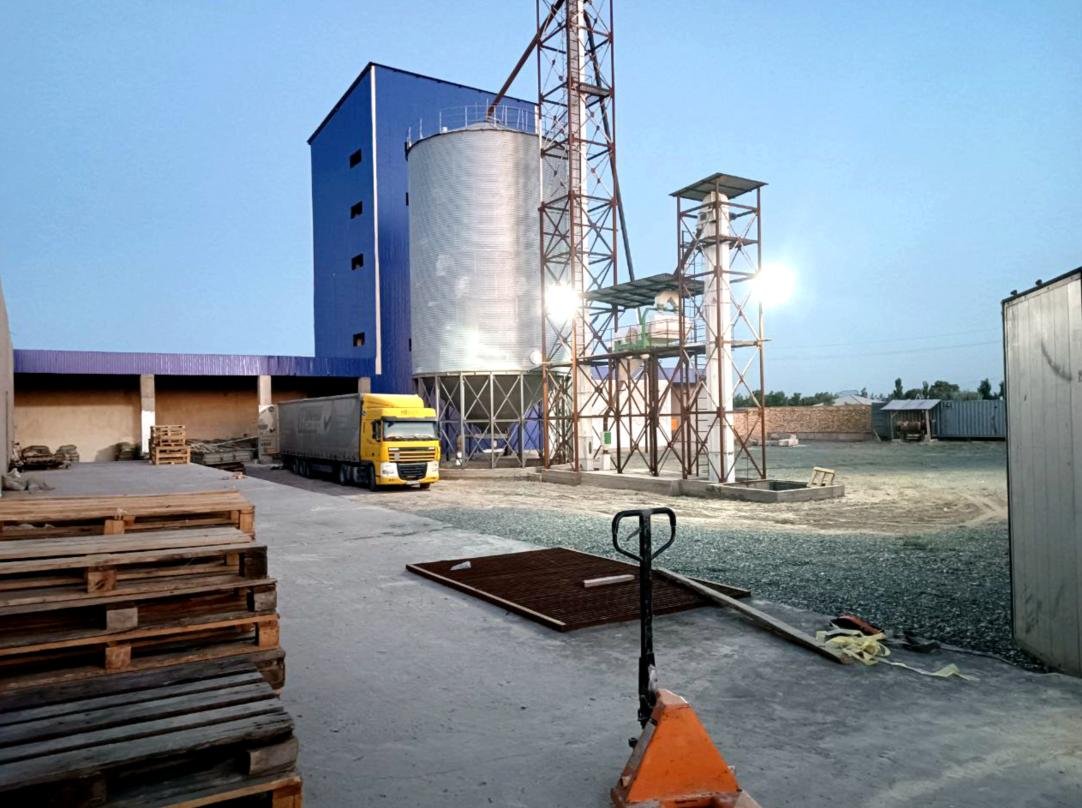
Forage can arrive as dry hay, silage, fresh grass, straw or baled crop residues. Its moisture and fiber length can vary widely. A high-moisture forage stream may need drying before grinding or pelleting, while sun-dried alfalfa at a suitable moisture level may proceed without a dedicated dryer. RICHI’s project descriptions include forage-based cattle feed configurations in which a drum dryer is integrated with crushing and mixing because the forage represents a substantial share of the formula. The correct decision depends on measured moisture and the required finished feed, not on the word forage alone.
The drying calculation should use incoming wet-feed rate, initial moisture and target moisture on a consistent basis. This determines the water-removal duty. The dryer must then be assessed for heat-source availability, residence time, airflow, exhaust conditions, fire protection and cleaning access. If the forage supply varies by season or supplier, provide a way to adjust feed rate and heat input. A dryer that is sized only for average moisture may become a bottleneck when wet material arrives.
Storage before and after drying should also be considered. Wet forage may deteriorate if held too long, while dried and ground forage can absorb moisture again if stored in an unsuitable area. Use covered storage, stock rotation and batch identification. Where the line uses both dry ingredients and forage, separate handling routes can reduce contamination and allow the operator to control the forage fraction without disturbing the rest of the formula.
Design the Batching and Mixing Section Around Formula Changes
Cattle feed production often involves multiple recipes. The batching system must weigh each ingredient within the required tolerance and deliver it in the correct sequence. A small plant may use manual or semi-automatic weighing, while a larger multi-formula plant may need multiple storage bins, automatic weighing and PLC control. The number of bins should be based on the ingredient list and the number of formulas that must be available without frequent manual changeover.
Mixing quality depends on batch size, mixer design, fill level, mixing time and the physical properties of the ingredients. Fine minerals, coarse grain particles and fibrous forage can segregate if the process is not controlled. Liquid addition such as molasses should be metered and distributed so that it does not create wet pockets or buildup. Define the target mixing performance and verify it using a suitable sampling plan during commissioning.
The batching and mixing layout should include access for cleaning and inspection. When formulas change, residual material in bins, conveyors and the mixer can affect the next batch. The project should define cleanout points, material segregation and traceability procedures, especially where medicated or specialty formulations are involved. Operators need to know which materials may share equipment and which require additional cleaning or separation.
Match Pelletizing and Crumbling to the Accepted Feed Form
A ring-die pellet mill is commonly used for commercial cattle feed pellet production. The pelletizing section should be selected against formula composition, forage percentage, pellet diameter and required throughput. The product page lists 2–12 mm pellet diameters and describes a pelletizing temperature around 80°C for the referenced process. This should be treated as a process reference, not a fixed setpoint for every formula; conditioning conditions must be validated with the actual ingredients and pellet specification.
Forage-rich formulas may behave differently from grain-dominant formulas. Fiber length, moisture, particle size, starch content and liquid addition all affect feeding and compression. A machine capacity quoted for one formula should not be transferred automatically to a different ration with a higher forage proportion. Record the formulation and operating conditions associated with any capacity estimate, and confirm whether the quoted figure refers to press throughput or saleable output after cooling and screening.
If the plant produces crumbles, the cooled pellets pass through a crumbler and screening system to reach the required particle range. The crumbler must be balanced with the pellet mill and cooler. Too much crumbling can create excess fines and reduce yield; too little can leave oversized pieces. Product specifications should state the required pellet or crumble dimensions and the method used to verify them.
Resolve Utilities and Layout Interfaces Before Civil Work
The electrical load schedule should include grinders, mixers, conveyors, elevators, pellet mills, coolers, crumbler, screens, dust collectors, dryers, fans, liquid-addition systems and packaging equipment. Confirm the simultaneous operating loads, starting methods, protection, cable routes, earthing and control requirements. Where drying or steam conditioning is included, document the heat source, fuel system, boiler or furnace boundary, exhaust route and safety provisions.
The general arrangement should show raw-material receiving, storage, process equipment, finished-product storage and dispatch. Verify floor elevations, foundation loads, anchor-bolt positions, steel platforms, maintenance clearances and lifting routes against approved drawings. A compact layout can become expensive if operators cannot remove a die, mixer shaft, screen or motor without dismantling adjacent equipment. Allow safe access for cleaning, inspection and routine maintenance.
Create an interface register that names the responsible party for civil works, transformer, distribution panels, field cabling, external conveyors, building ventilation, dust collection, fuel supply, installation lifting equipment and commissioning support. This avoids scope gaps where the machine supplier assumes that a utility or structure is buyer-supplied while the buyer assumes it is included in the equipment package.
Commission With the Actual Cattle Feed Formulas
Commissioning should progress from installation inspection to no-load checks, interlock tests and material trials. Verify equipment alignment, anchoring, lubrication, guards, motor rotation, emergency stops, overload protection and safe shutdown logic before feeding material. Test the receiving and conveying sequence so that an upstream machine cannot continue feeding a stopped downstream section.
The production trial should use representative ingredients and at least the main commercial formulas. Record ingredient sources, moisture, particle size, batching weights, mixing settings, liquid addition, conditioning conditions, pellet die, feed rate, pellet dimensions, cooling conditions, crumble settings where applicable and saleable output. A trial using only an easy-to-process grain formula does not demonstrate the line’s ability to handle a forage-rich ration.
Acceptance criteria should define the product form, formula, test duration, sampling method, throughput calculation, utility conditions and treatment of start-up or changeover time. Measure the finished product after cooling, screening and crumbling, not only the rate leaving the pellet mill. If results fall outside specification, identify whether the cause is raw material, grinding, batching, mixing, conditioning, pelletizing or downstream handling, then repeat the test under comparable conditions after corrective action.
Build the Operating Plan Around the Seasonal Feedstock Mix
Cattle feed plants may use different forage sources through the year. A plant that relies on alfalfa during one season and straw or silage at another time needs a clear recipe and process-change plan. Confirm whether the same grinding and drying system can handle each material, whether separate storage is required and what changes must be made to feeder settings or formulation. Do not assume that the highest rated capacity applies to every seasonal blend.
A practical project brief should include the animal categories served, product forms, formula range, ingredient proportions, forage types and moisture, target output by product, operating hours, site layout, available power and heat, storage plan and packaging requirements. These inputs allow the equipment scope and process sequence to be matched to the plant’s actual duty rather than to a generic cattle feed line.
Conclusion: Make the Feed Formula the Basis of Plant Design
A cattle feed processing plant performs reliably when ingredient preparation, forage handling, batching, mixing, conditioning, pelletizing and finishing are designed around the accepted feed formulas. The biggest design differences often come from forage moisture and fiber, the number of formulas, and whether the finished products include mash, pellets or crumbles. Resolve these decisions before finalizing the layout and utility scope.
For the process scope and equipment options, review the RICHI cattle feed processing plant solution. Prepare representative ingredient samples, formula proportions, moisture ranges, target products and site information so the proposed line can be checked against real production conditions.